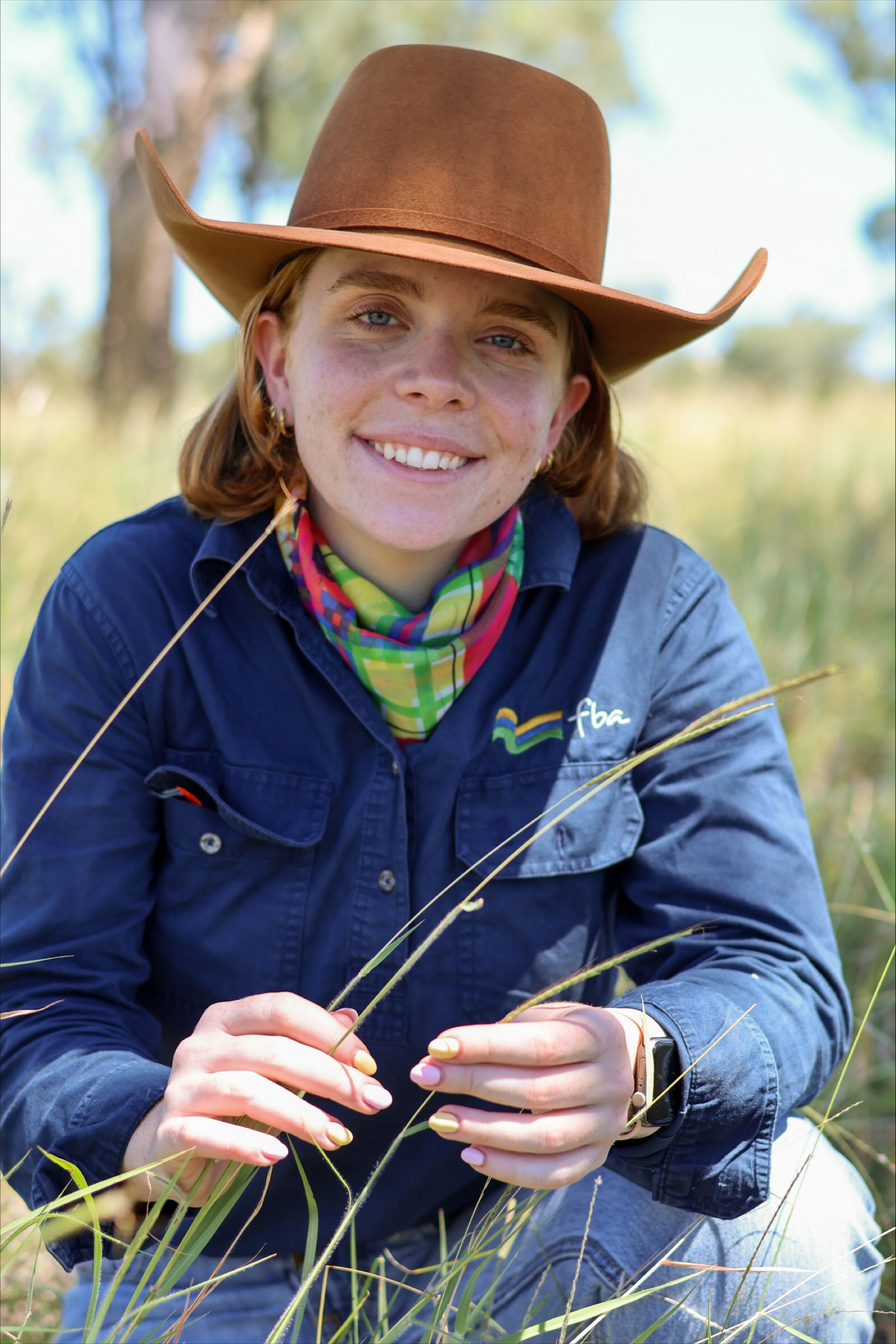
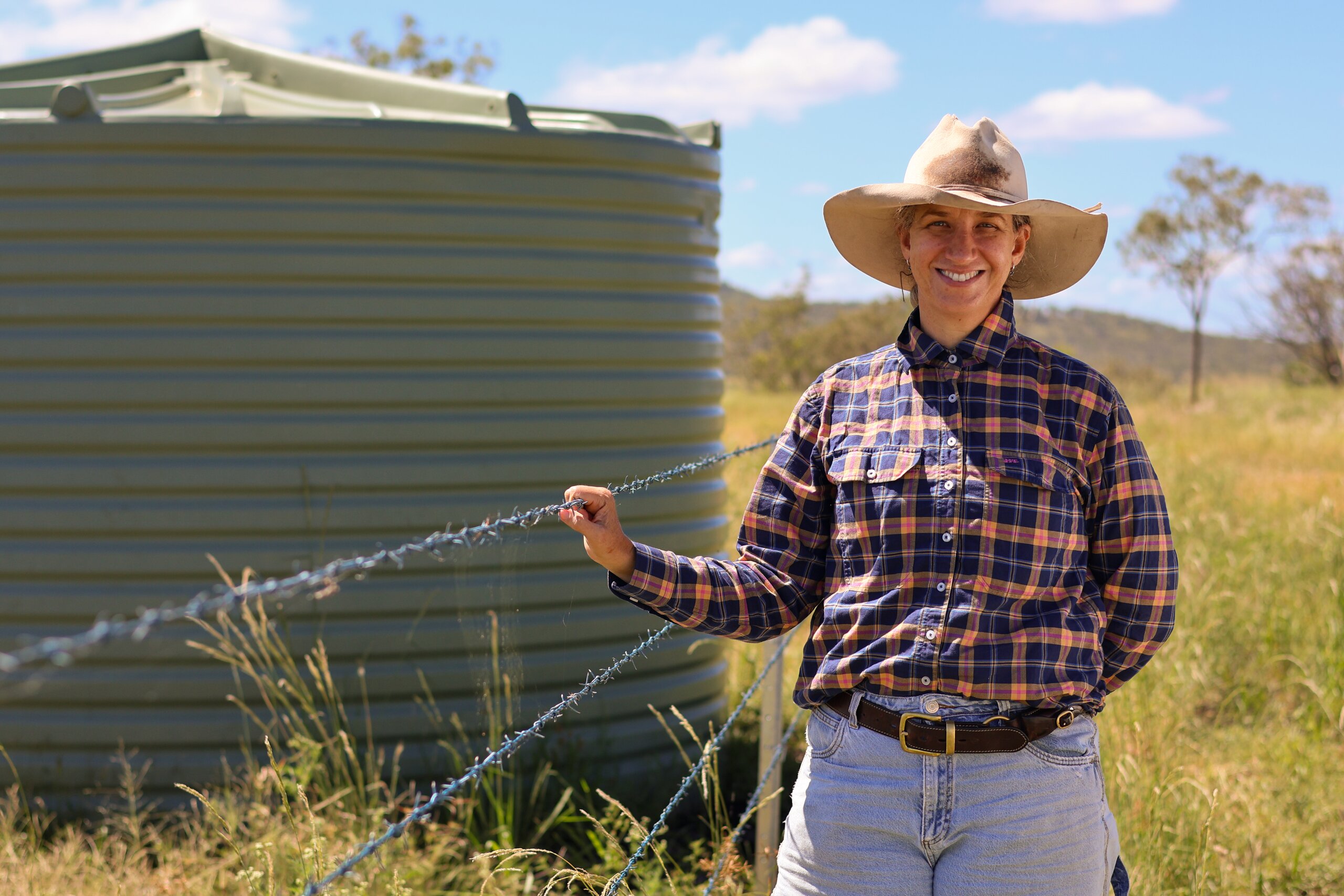
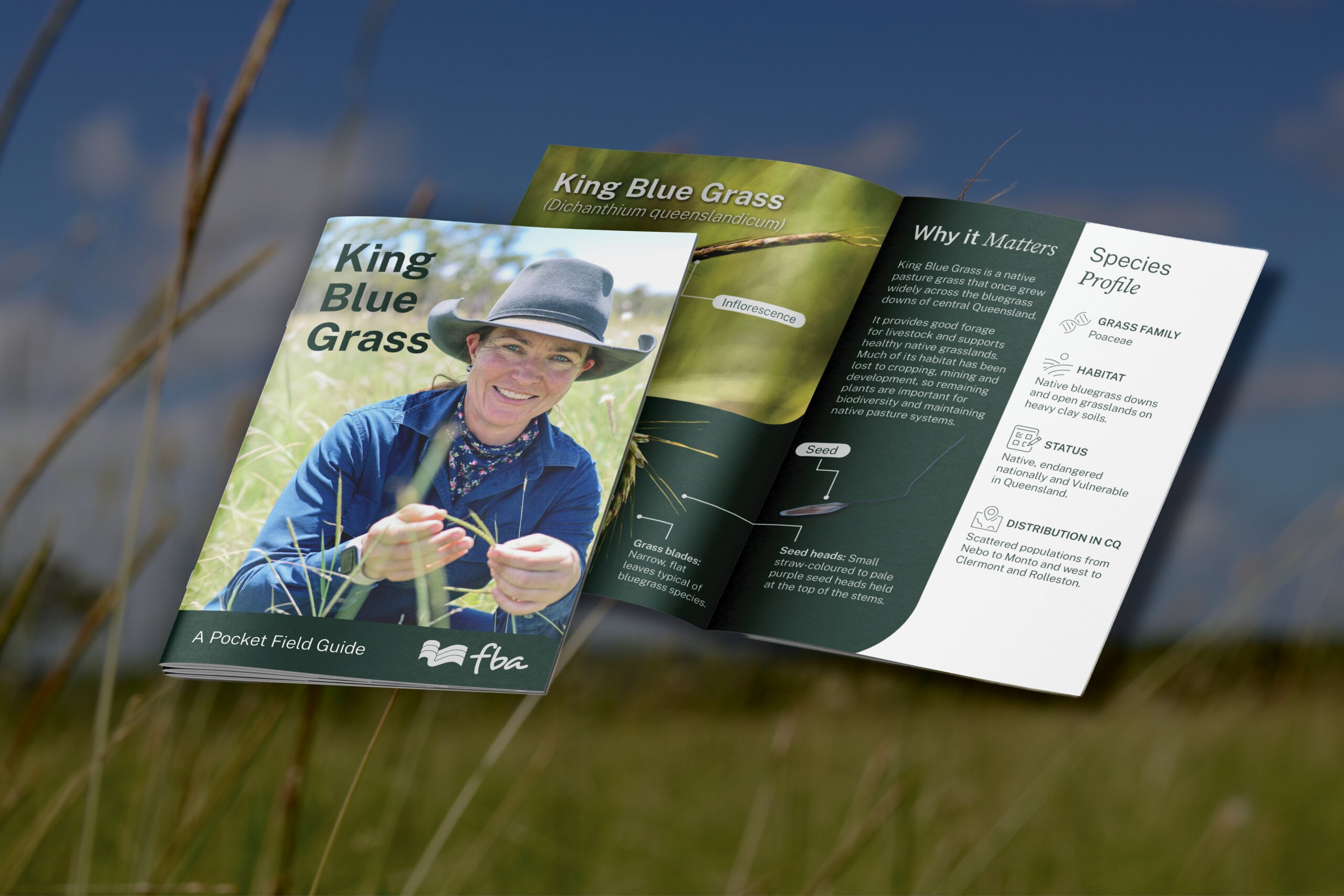
FBA and BHP Mitsubishi Alliance (BMA) have teamed up with passionate central Queensland land managers to get brigalow and agriculture working together to deliver diversity health back to the region. The collaboration aims to shift the paradigm and facilitate land managers to explore the untapped potential and value of brigalow in agricultural production systems.
Central Queensland Natural Resource Management organisation, FBA, identifies regional priorities and collaborates with local organisations, such as BMA, to find and fund effective solutions.
Brigalow is both the name of an Australian native tree species and woodlands dominated by brigalow trees. Brigalow woodlands once covered an area extending from Townsville to northern New South Wales known as the Brigalow Belt. This region was a biodiversity hotspot home to unique and diverse wildlife, including endangered reptiles and mammals.

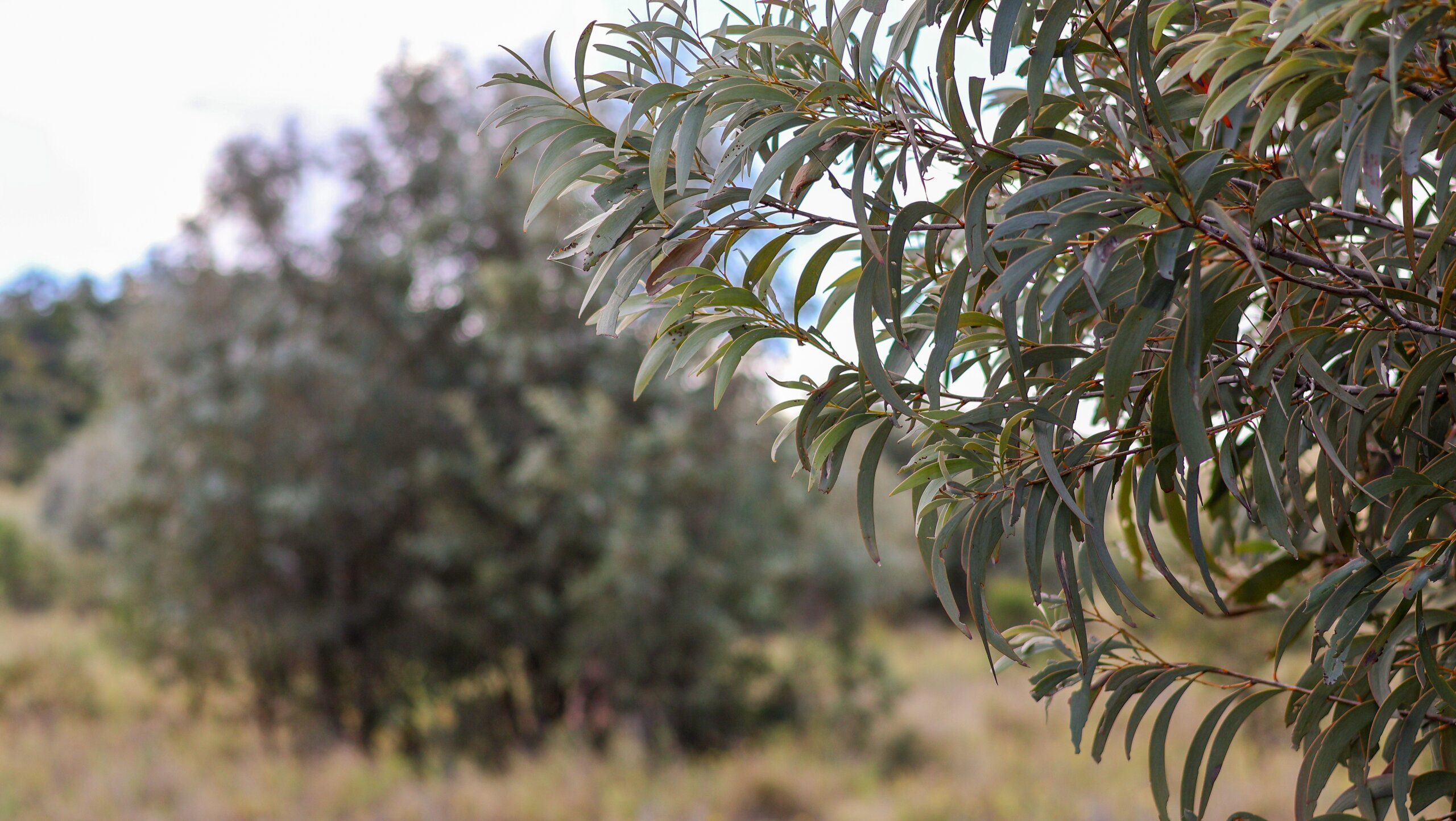
Brigalow trees on a central Queensland property
The Brigalow Land Development Fitzroy Basin Scheme is known as among the largest land development schemes undertaken by the Queensland Government (Moffatt, 2018). Due to the impact of the scheme, brigalow is listed as endangered with 90% of the original extent destroyed or severely degraded. Unfortunately, brigalow regrowth is often viewed by land managers unfavourably as the dense thickets of suckers are difficult to manage and limit agricultural land use.
FBA is working with land managers in Banana, Taroom, Springsure and Middlemount, to trial innovative brigalow vegetation management practices with the aim of striking a balance between production and environmental outcomes.
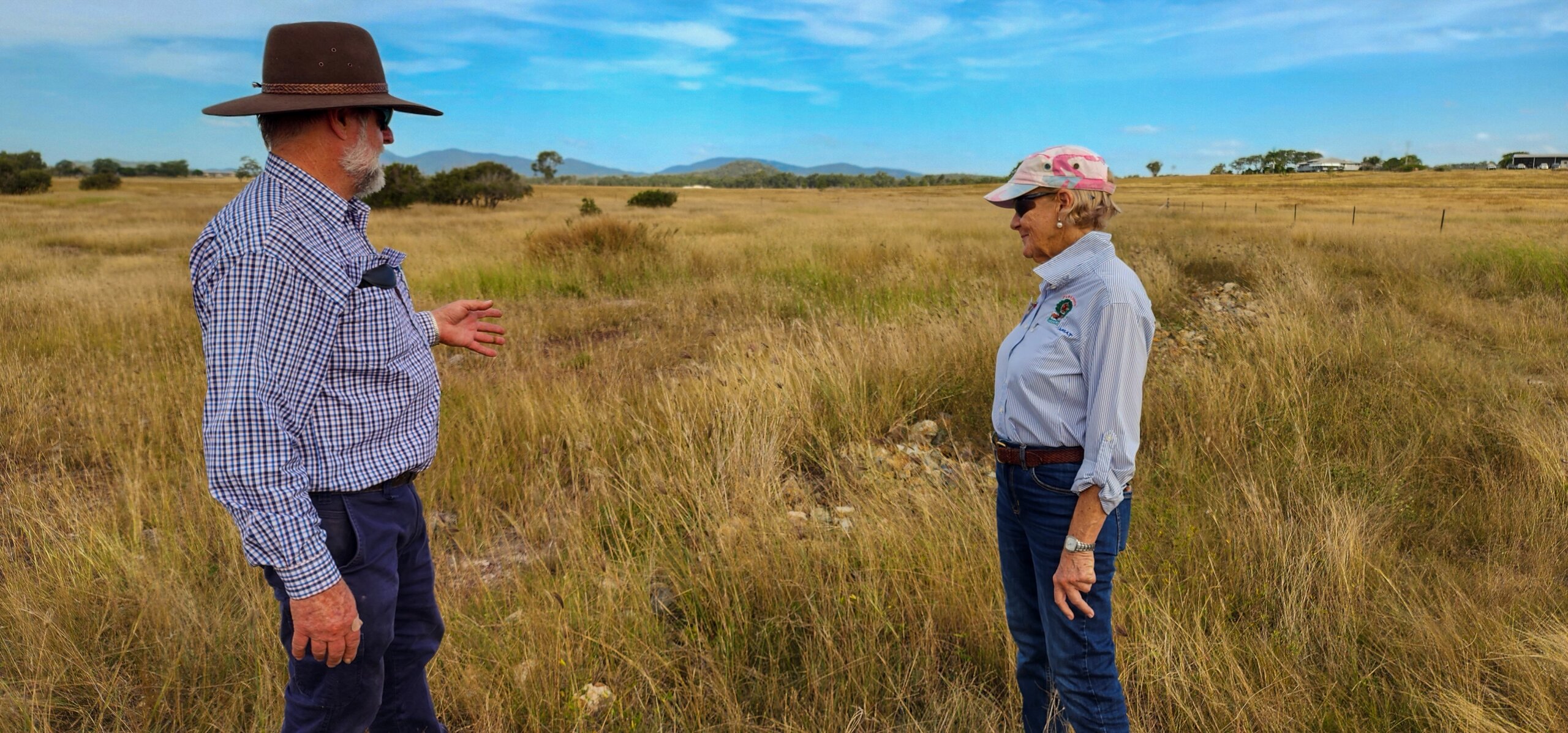
Melinee and Rob Leather own and operate Leather Cattle Co. and manage Barfield, a 6,113ha cattle property in Banana, along with two other properties.
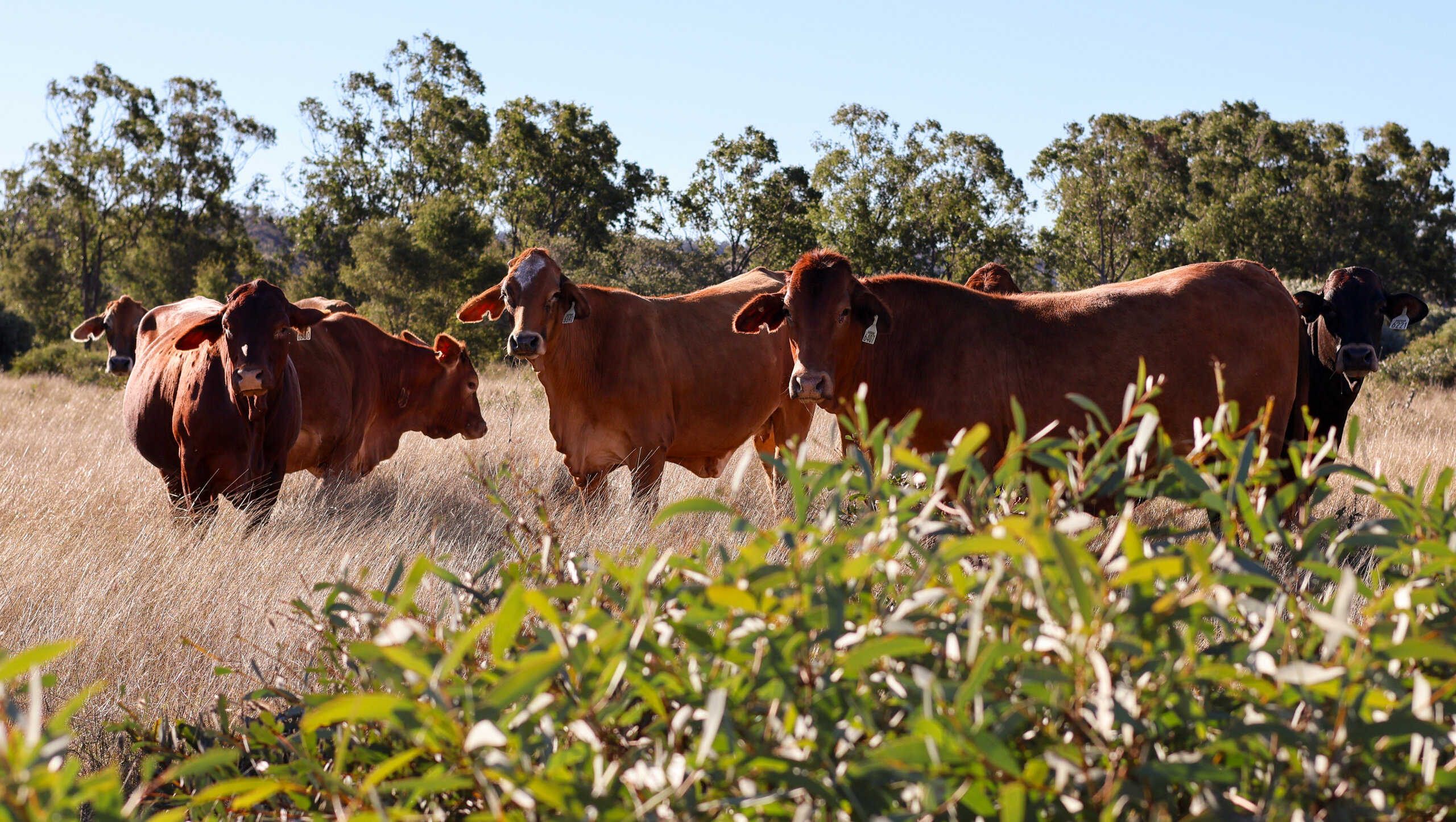
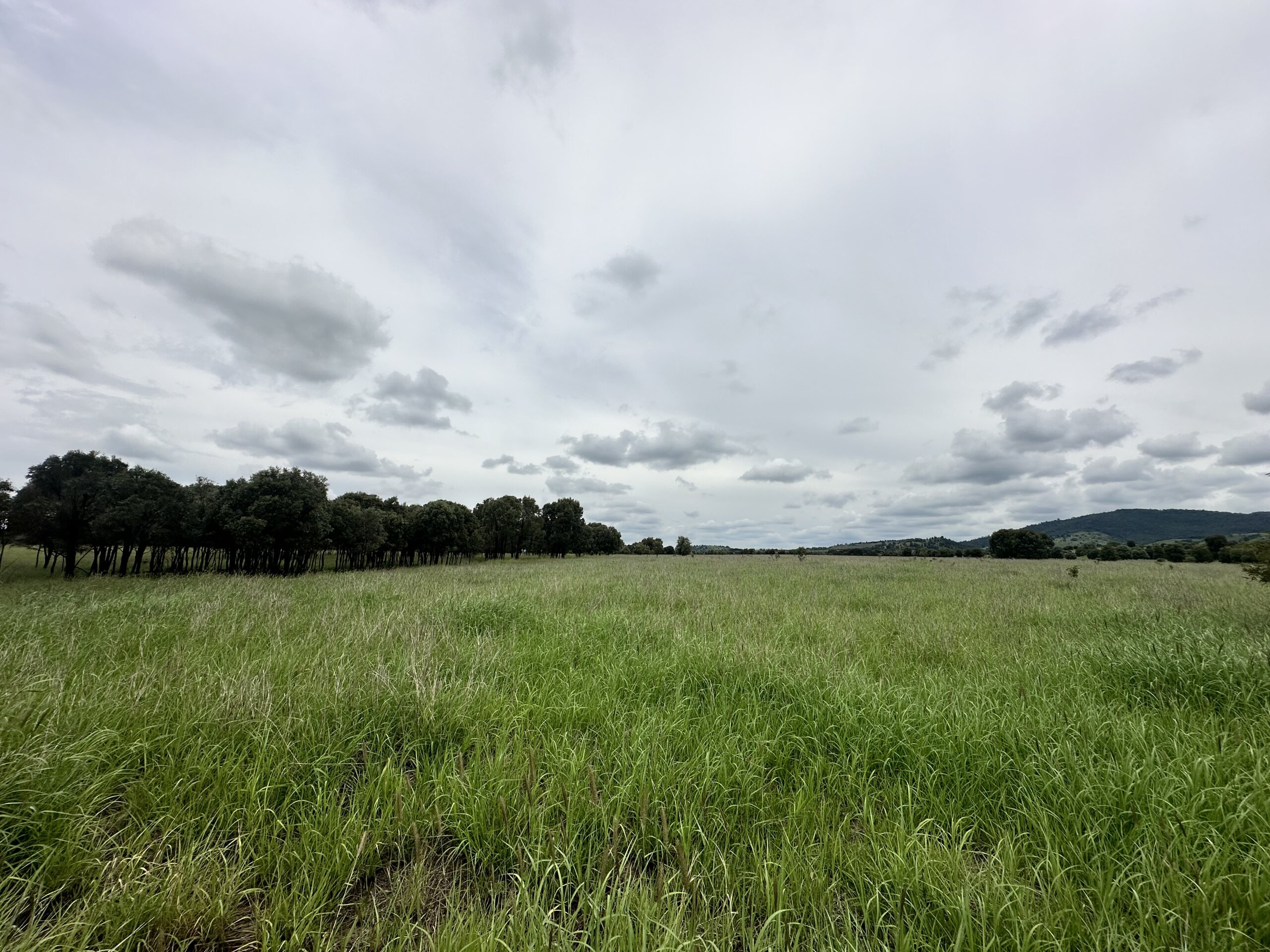
Cattle grazing in a paddock with brigalow on a central Queensland property
“We want to be able to manage the brigalow regrowth so it’s not getting thicker. We want to enable sunlight to come through to grow grass. I would like to see an open brigalow woodland with 30-40% canopy cover,” Melinee said.
“The goal is to have happy healthy landscape, livestock and people while being productive.”
In grazing systems, brigalow can be a valuable tool to boost productivity through its contribution to land and soil health. As a legume, brigalow trees fix nitrogen in soil, contributing to the improved soil fertility and plant health. Brigalow trees also improve water infiltration and retention, are vital for nutrient cycling, sequester carbon and provide a valuable habitat for native species. Brigalow also forms valuable canopy cover, which maintained at 30-40%, can reduce heat stress to livestock resulting in healthier cattle.
FBA Land Management Officer Sophie Wilkins said FBA is interested to understand which brigalow management strategies deliver the best environmental and production outcomes.
“The main techniques we see used throughout the catchment are Graslan Herbicide, blade ploughing or cutter barring and then stick raking the timber leaving small shade patches behind,” Sophie said.
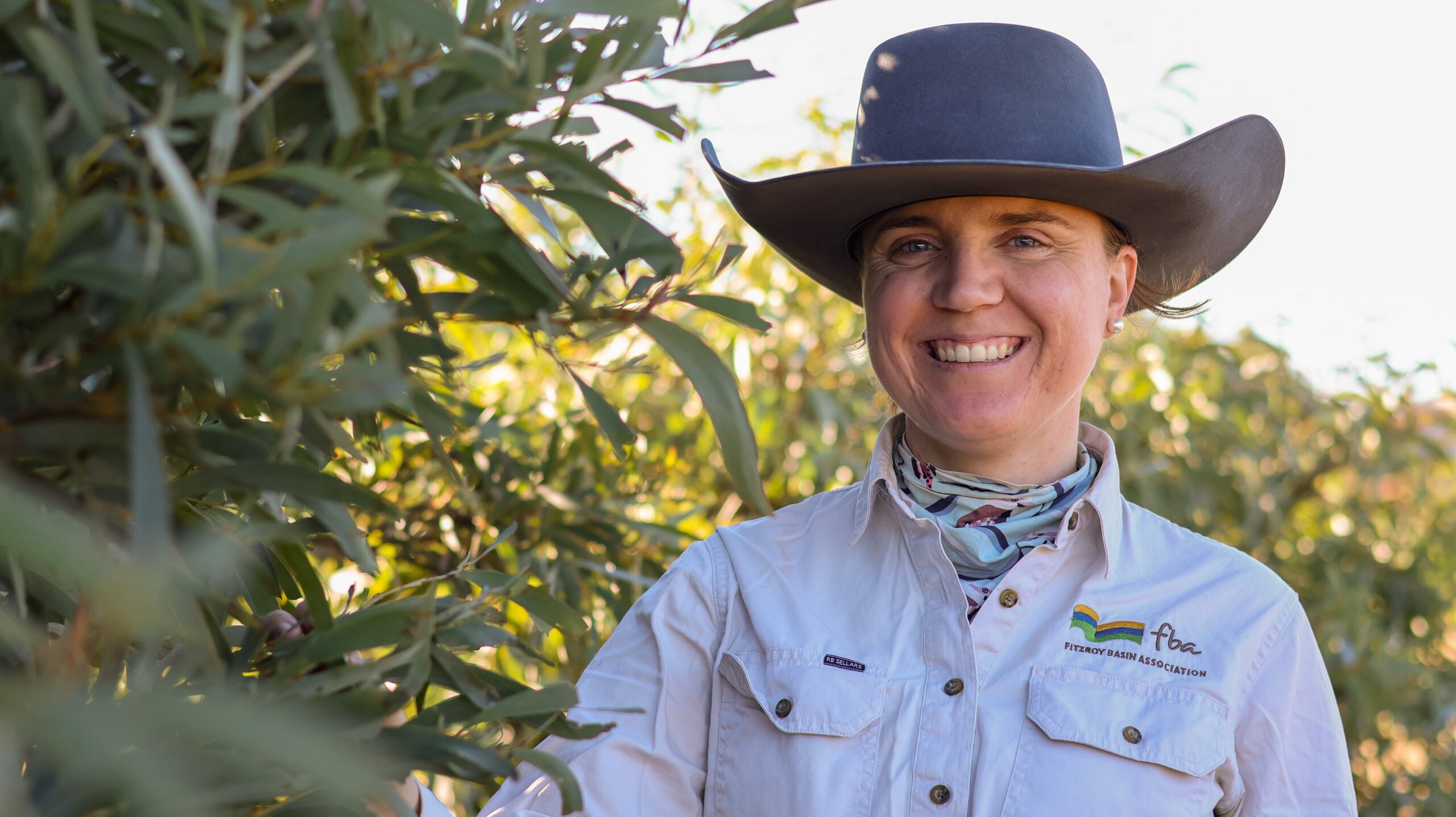
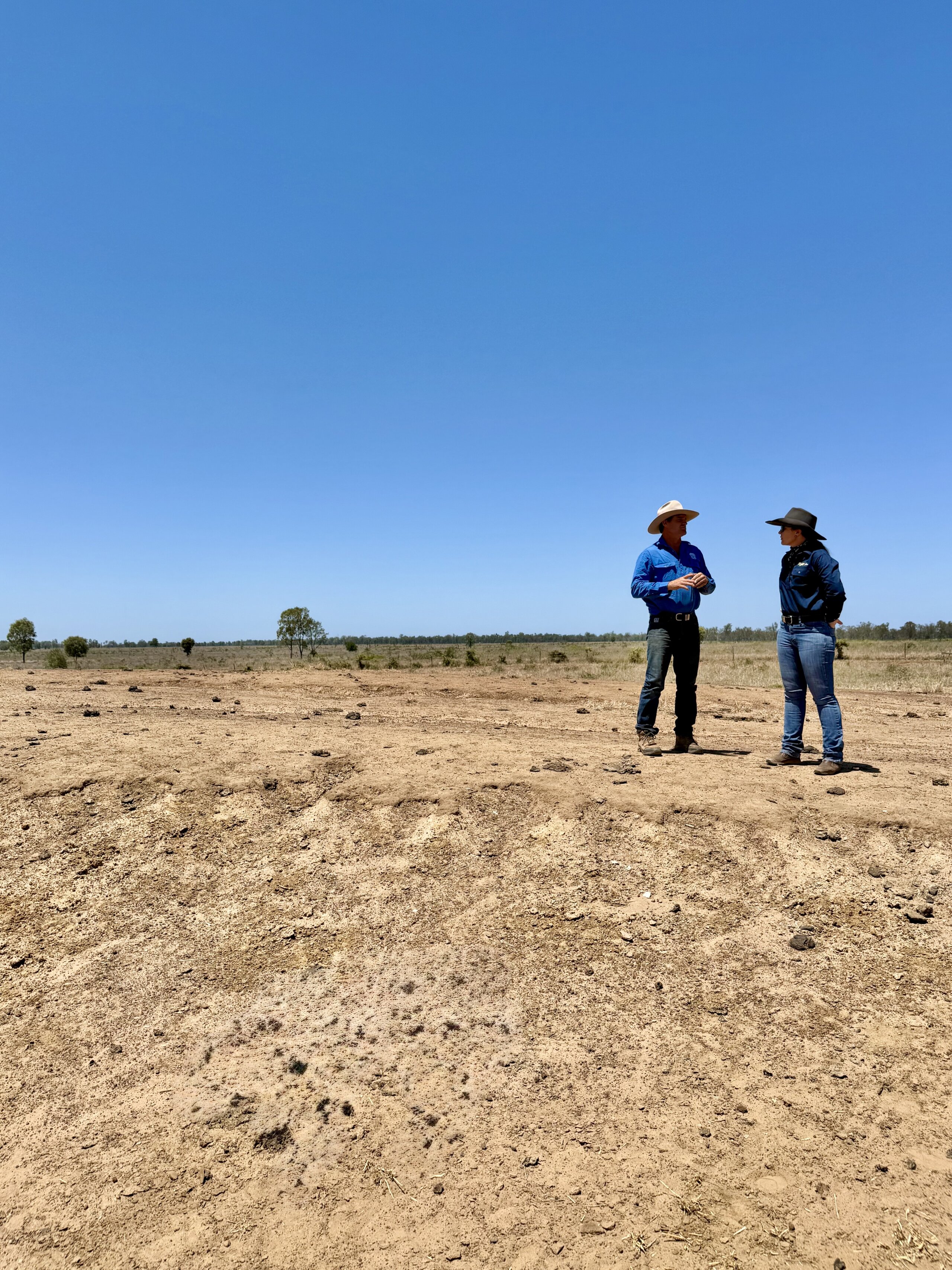
FBA Land Management Coordinator Sophie Wilkins
“Brigalow regrowth clearing is common in central Queensland. As brigalow is a legume, when it dies it releases nitrogen. This gives the grasses a big nitrogen boost and will initially lift grass production. However, after around seven years, this soil nutrition is gone, grass production is declining and brigalow regrowth is taking over. This leads to more land clearing and an ongoing cycle. Central Queensland land managers are reporting that this cycle is slowly becoming less productive with each clearing proving less grass growth resulting in them looking for alternative solutions.
“The FBA and BMA collaboration offers a real opportunity to reflect on different management approaches. These insights hold the potential to shape future recommendations for land managers across central Queensland.”
Sonia Winter, BMA General Manager, Planning Technical and Environment, said BMA was committed to working alongside landholders to create resilient rural communities.
“We want to help strengthen the long-term health and productivity of central Queensland.
“When our industry thrives, so do the communities where we operate."
FBA understands regional needs and is proud to collaborate with local organisations to ensure proven, effective solutions are supported and delivered where they’re needed most.
Reference
Moffatt, J. (2018). ‘It was their baby’: Land ballots and the Fitzroy Basin Brigalow Development Scheme. John Oxley Library. Retrieved from https://www.slq.qld.gov.au/blog/it-was-their-baby-land-ballots-and-fitzroy-basin-brigalow-development-scheme