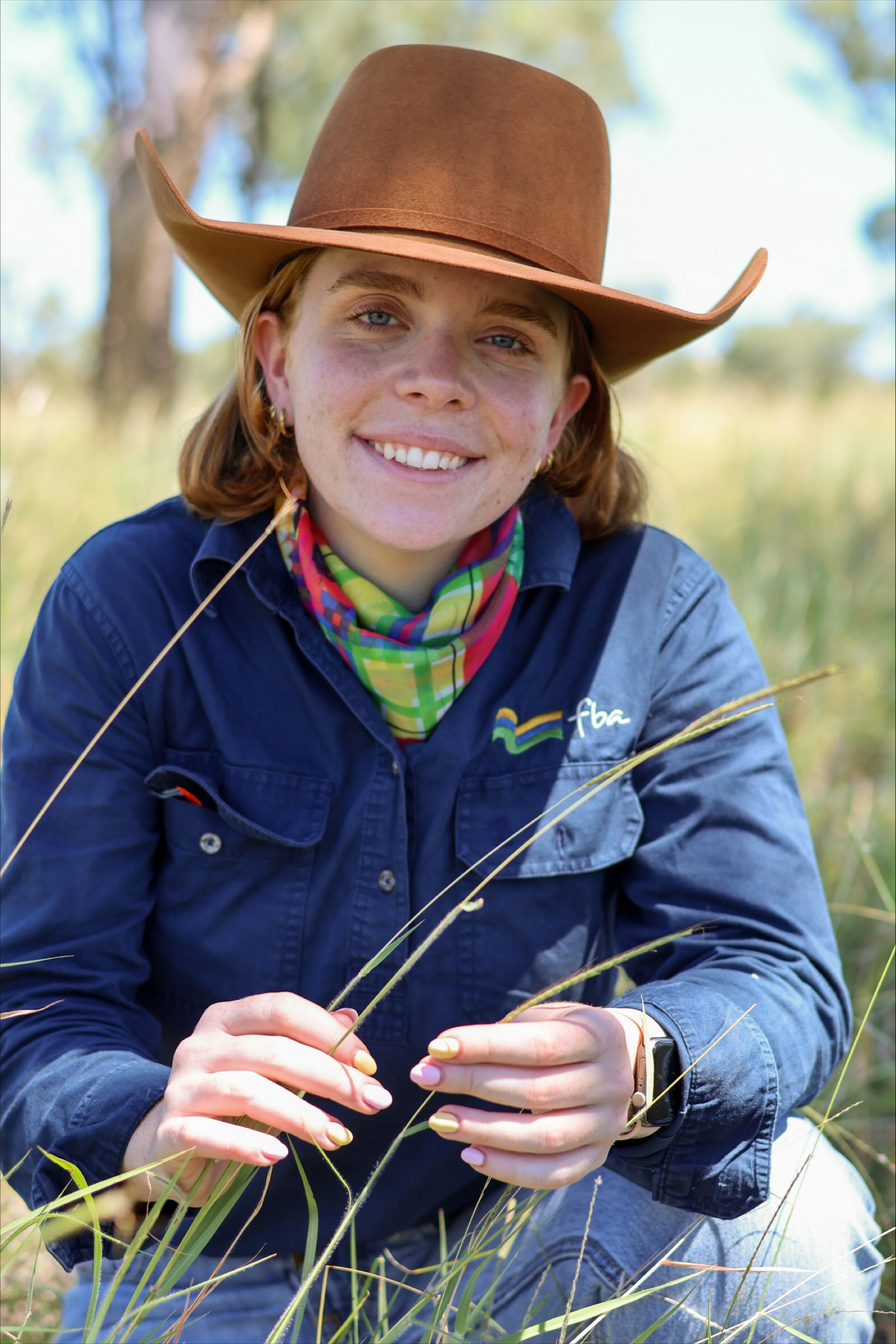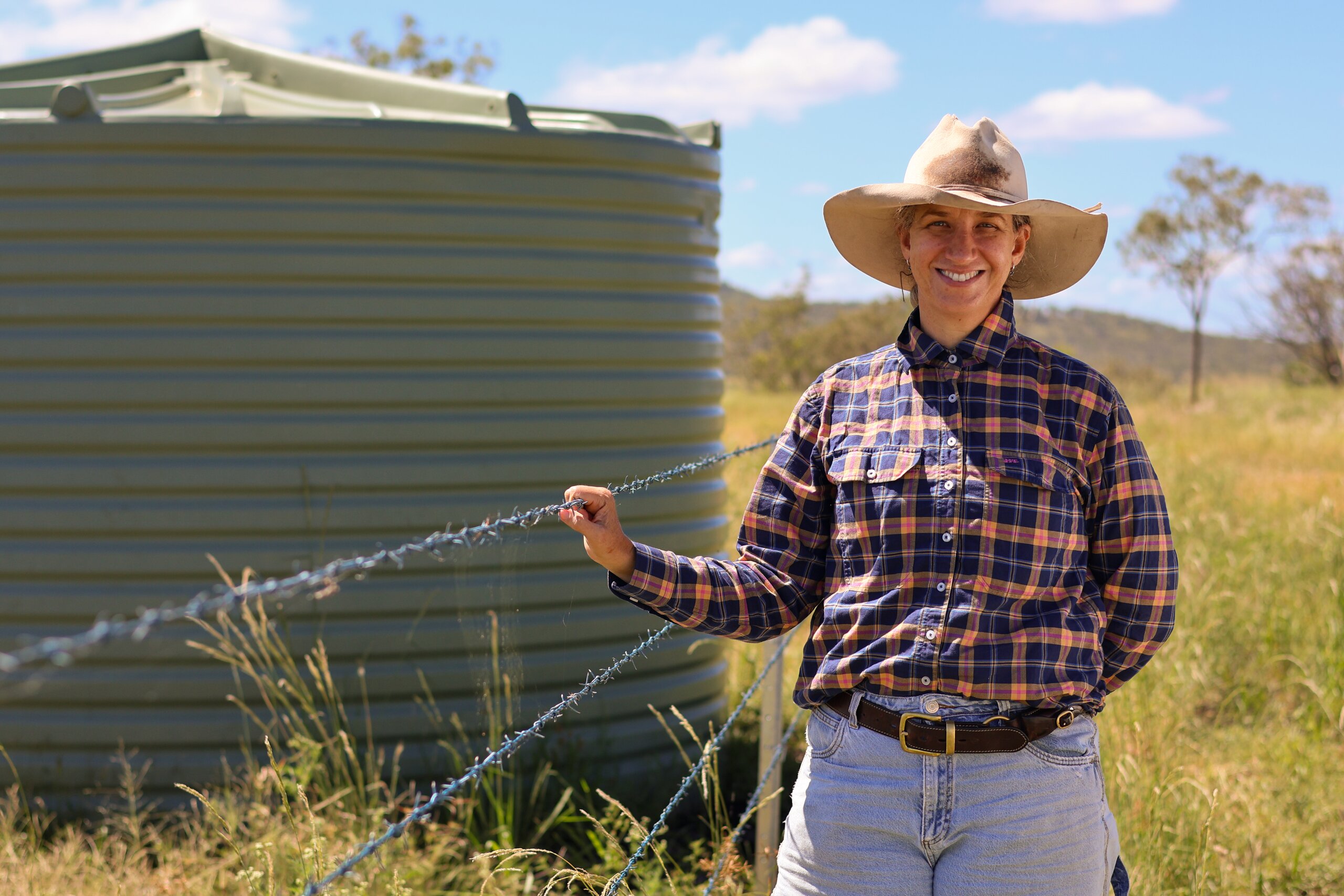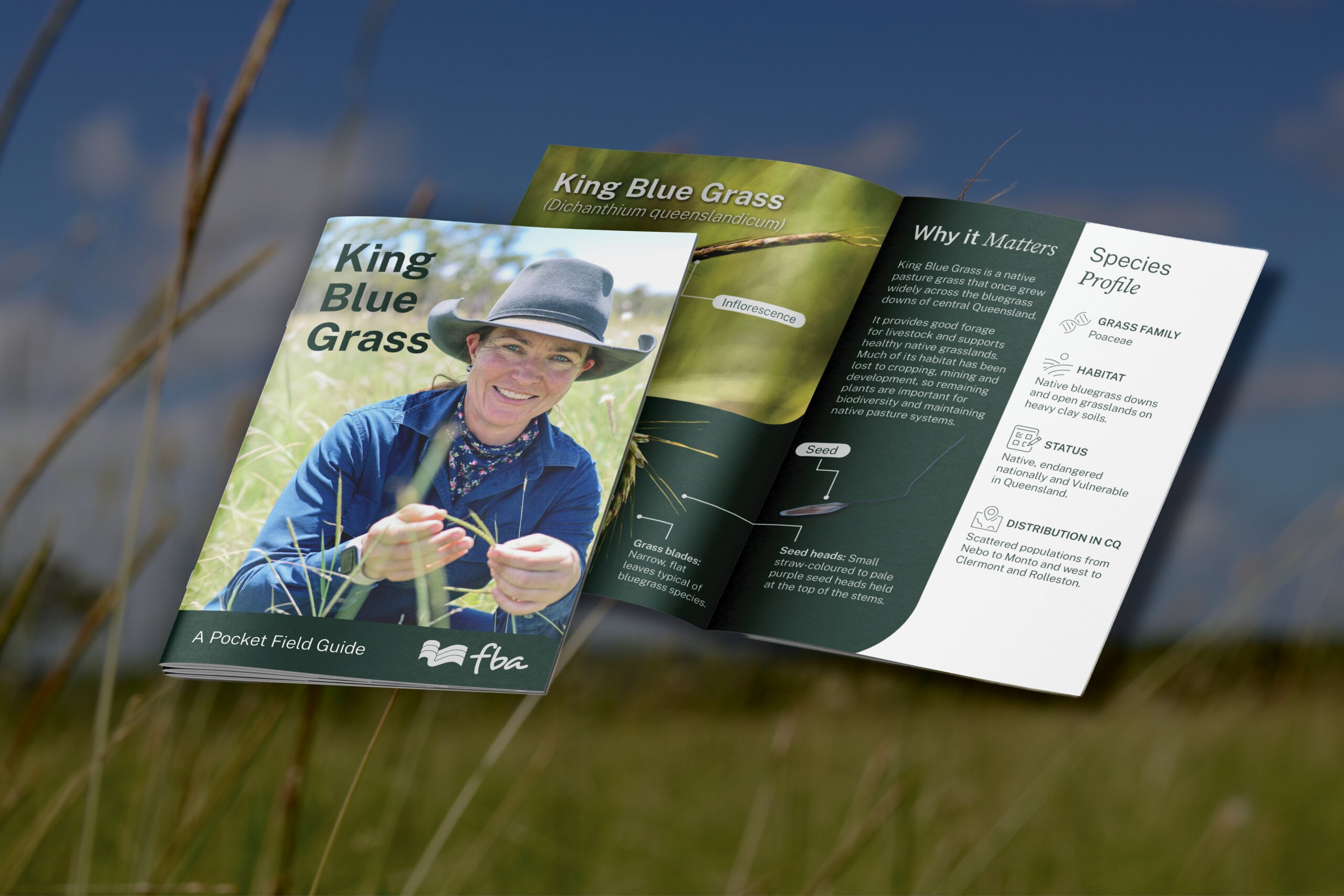
As part of her role supporting land managers across central Queensland, FBA Land Management Officer Sheree Johnston visited Redcliffe, a property where sweeping paddocks and familiar soils immediately hinted at both the landscape’s beauty and its challenges.
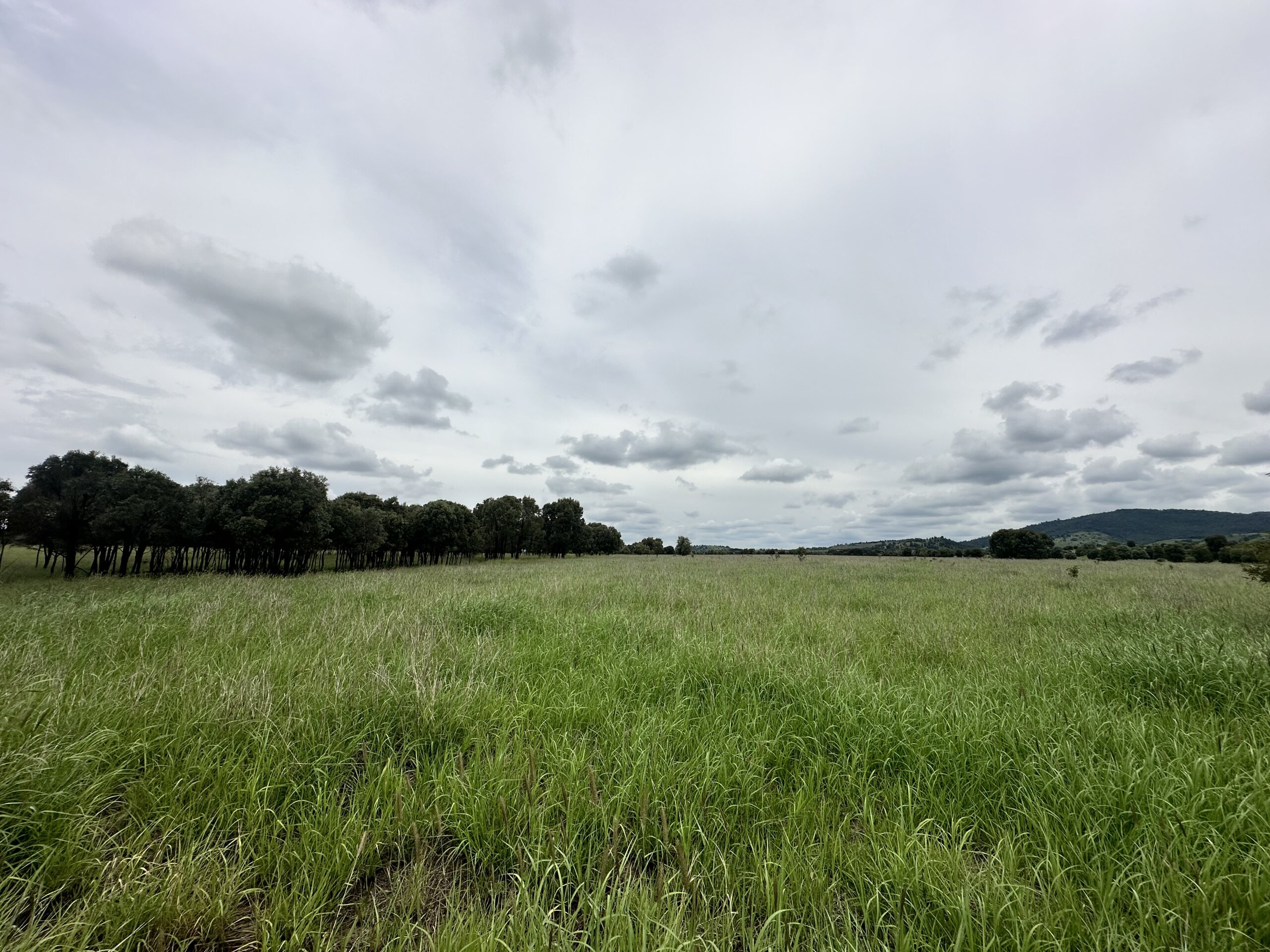
Coming around the corner to the front gate of Redcliffe, you would be forgiven for thinking the property has no end as you take in the flat, seemingly infinite paddocks in front of you. Rich red dirt fades to light sandy soils framed by bulloak, box flats and brigalow scrub. It’s a picture of rural Queensland life with working dogs and horses greeting you on the drive in.
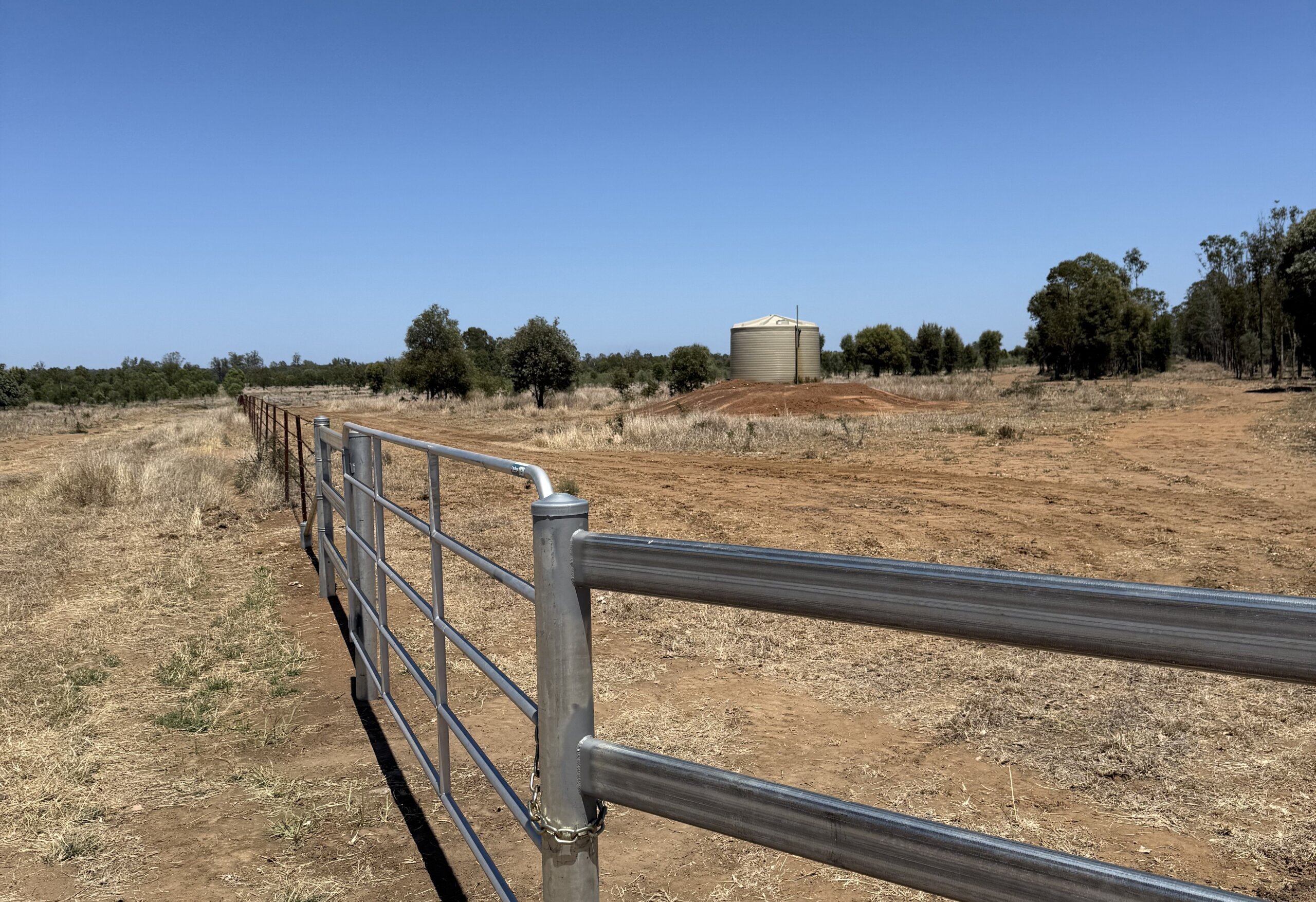
Freshly installed fence on Redcliffe
For Rob and Annie Donoghue, the property has been home for 17 years, but has been in Annie’s family since 1979. Together with their sons Lachlan and Charlie, they’ve supported 47,548 hectares of central Queensland soil as a thriving breeding and finishing operation. It’s a family effort built on long hours in the saddle, dust covered boots, and a deep respect for country.
Although Rob and Annie already implement rotational grazing through multiple split paddocks, a paddock they call Mistake Paddock was still on their to do list. Spanning 1,355 hectares, it had limited water, which meant cattle tended to overgraze in some spots and avoid others entirely.
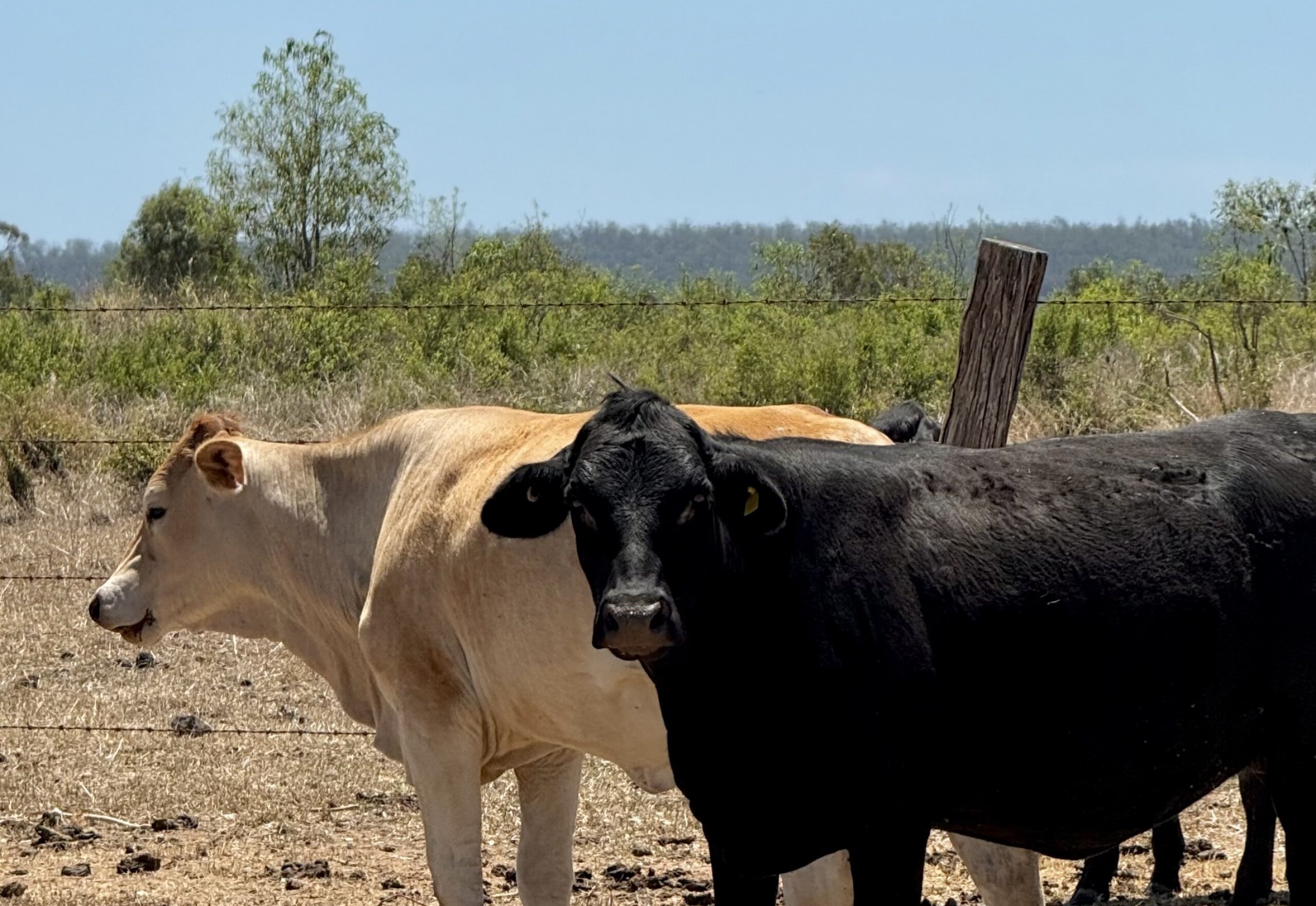
Cows on Redcliffe
Through its centre runs Conciliation Creek, a sandy waterway that fills fast when the rains come through before winding its way toward the Dawson and out to the reef. Cattle often drank straight from the creek after heavy rains, eroding the banks and leaving bare patches that struggle to recover.
Rob and Annie knew that needed to change. The couple first crossed paths with FBA at a land management event years ago. At the event there was a conversation that sparked a partnership. Since then, they’ve worked with FBA to fence off several creeks across Redcliffe.
How FBA supported Redcliffe through the GRASS program:
a tailor-made action plan for land management
4.7 kilometres of fencing
2 kilometres of poly pipe and one solar pump
one tank, and one trough
Rob explained, “it was perfect timing for us when we heard about the available support through FBA. We were looking to do some more fencing to split some paddocks up by land type and help us to manage the cattle access to the creek and if someone’s going to help you do some fencing, you’d be crazy not to accept that help.”
FBA Land Management Officer, Sheree Johnston took the call from Rob and Annie.
“When Rob and Annie reached out and said they had another paddock for me to look at I came out to confirm it was a good fit for our Grazing Resilience and Sustainable Solutions (GRASS) program and from there the work began,” said Sheree.
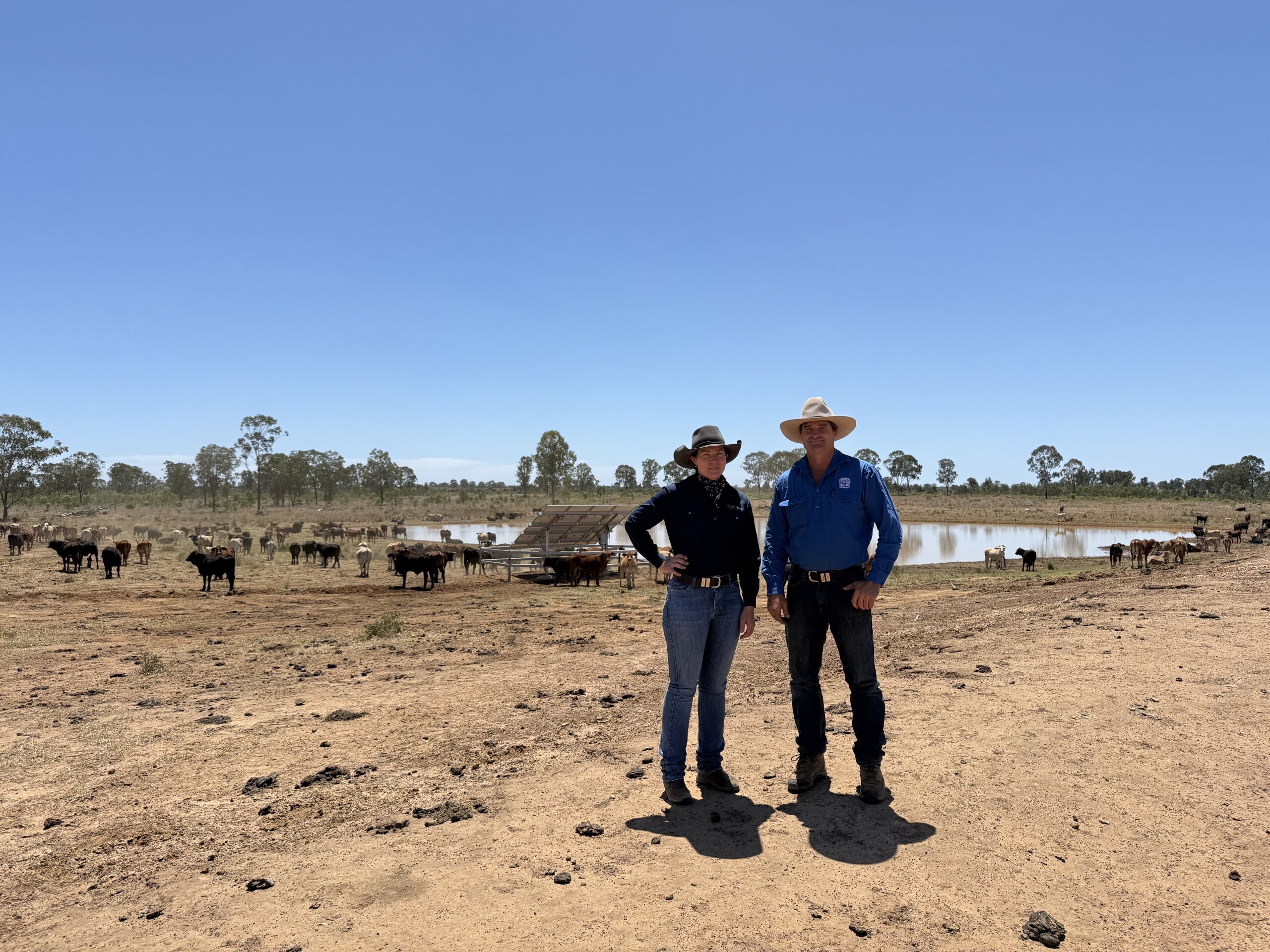
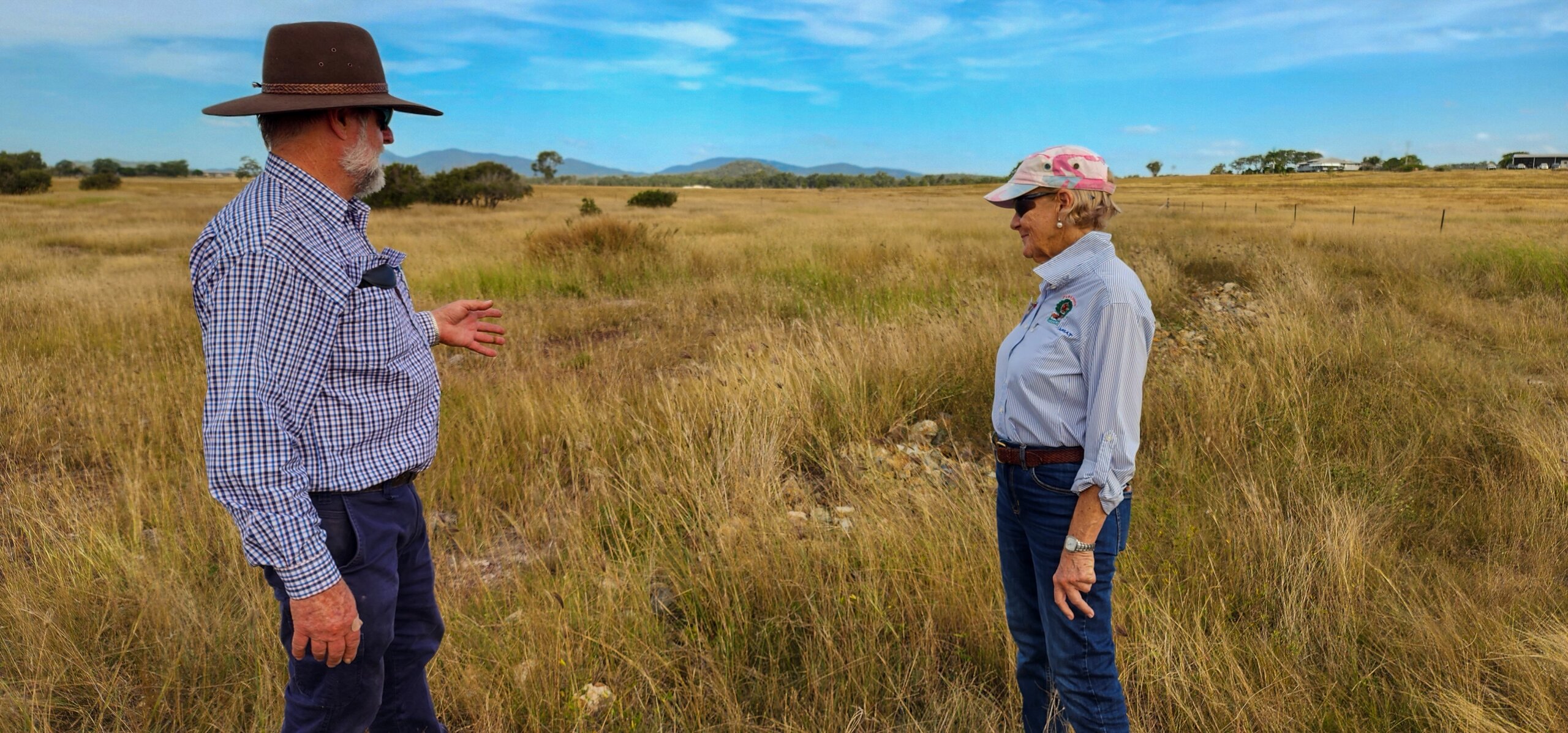
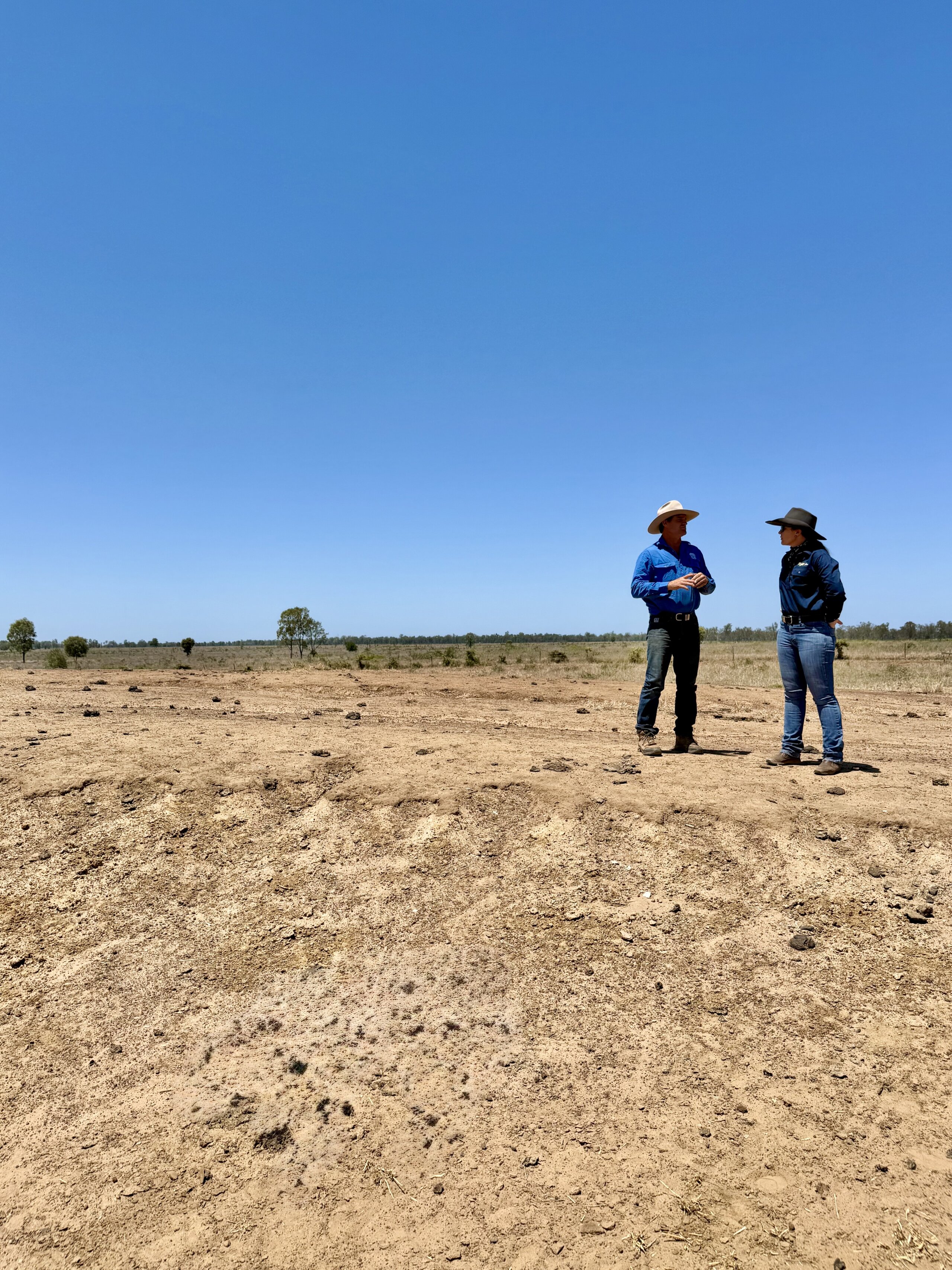
Sheree and Rob in front of the paddock
When Sheree first visited the property, the paddock was sitting around C condition. She has high hopes that the completed work will boost that score and help the land thrive.
“Thanks to the GRASS funding that supports graziers to develop and implement tailor-made action plans for land management. FBA was able to support them with 4.7 kilometres of fencing, 2 kilometres of poly pipe, one solar pump, one tank, and one trough,” Sheree said.
When the fencing was complete, Rob and Annie were able to leave the paddock to rest and despite battling dry weather, fresh green shoots have already begun to appear, speckling the parched grounds with new bursts of life.
When asked what was next for Redcliffe, Rob was quick to answer.
“Redcliffe has been good to us, we just want to make sure it stays that way. We want to get it to a place where it’s always ready for the next rain, and the next generation.”
For Rob and Annie, the reward isn’t just in the fences or the pumps, it’s in the resilience of the land itself carefully balanced with the legacy of a thriving working property passed down the generations.
If you'd like to print or view the case study as a PDF, click here.
The Grazing Resilience and Sustainable Solutions (GRASS) program is funded through the Queensland Government’s Queensland Reef Water Quality Program and delivered by the Department of Primary Industries (DPI), FBA, Burnett Mary Regional Group, and NQ Dry Tropics.