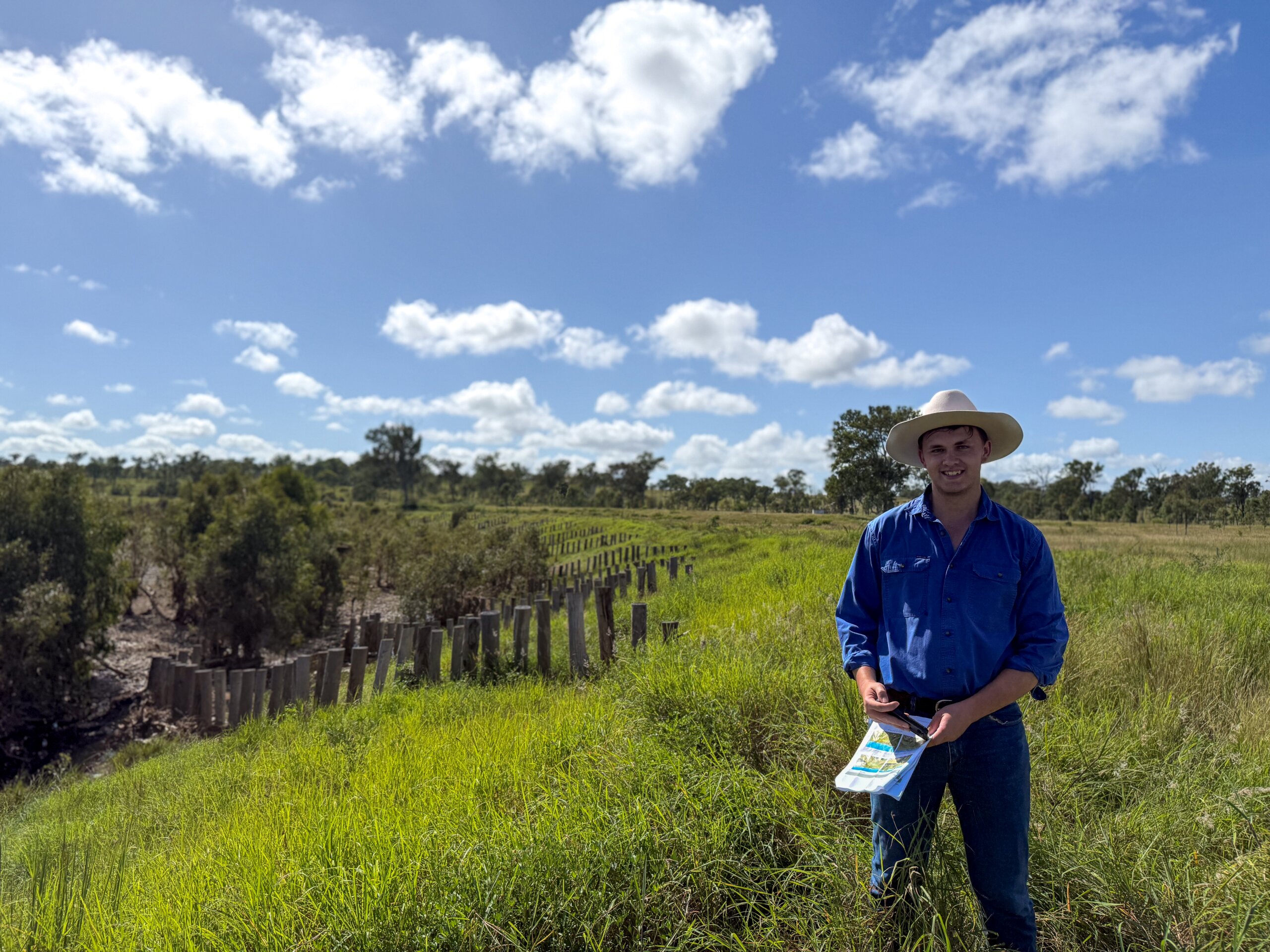
"One of the most rewarding parts of this project has been seeing how well the site held up during heavy rainfall events. Thanks to that real world testing within the project timeline we can confidently say the methods used for this project and the team’s effort have paid off," FBA Project Officer Benjamin Vissenga.
Through an ever-changing time series of photographs, Six Mile Creek transforms before your eyes. It didn’t happen all at once, but month by month and year by year. What started as an eroding bank with towering, steep and crumbling walls in 2023 has evolved into a landscape that has weathered a flood and remained a rehabilitation success.
The site sits within the Fitzroy Basin, about 15 kilometres south-west of Raglan. Over 640 metres of streambank has been carefully reshaped, its most vulnerable edges stabilised, where erosion once carved steadily inward.
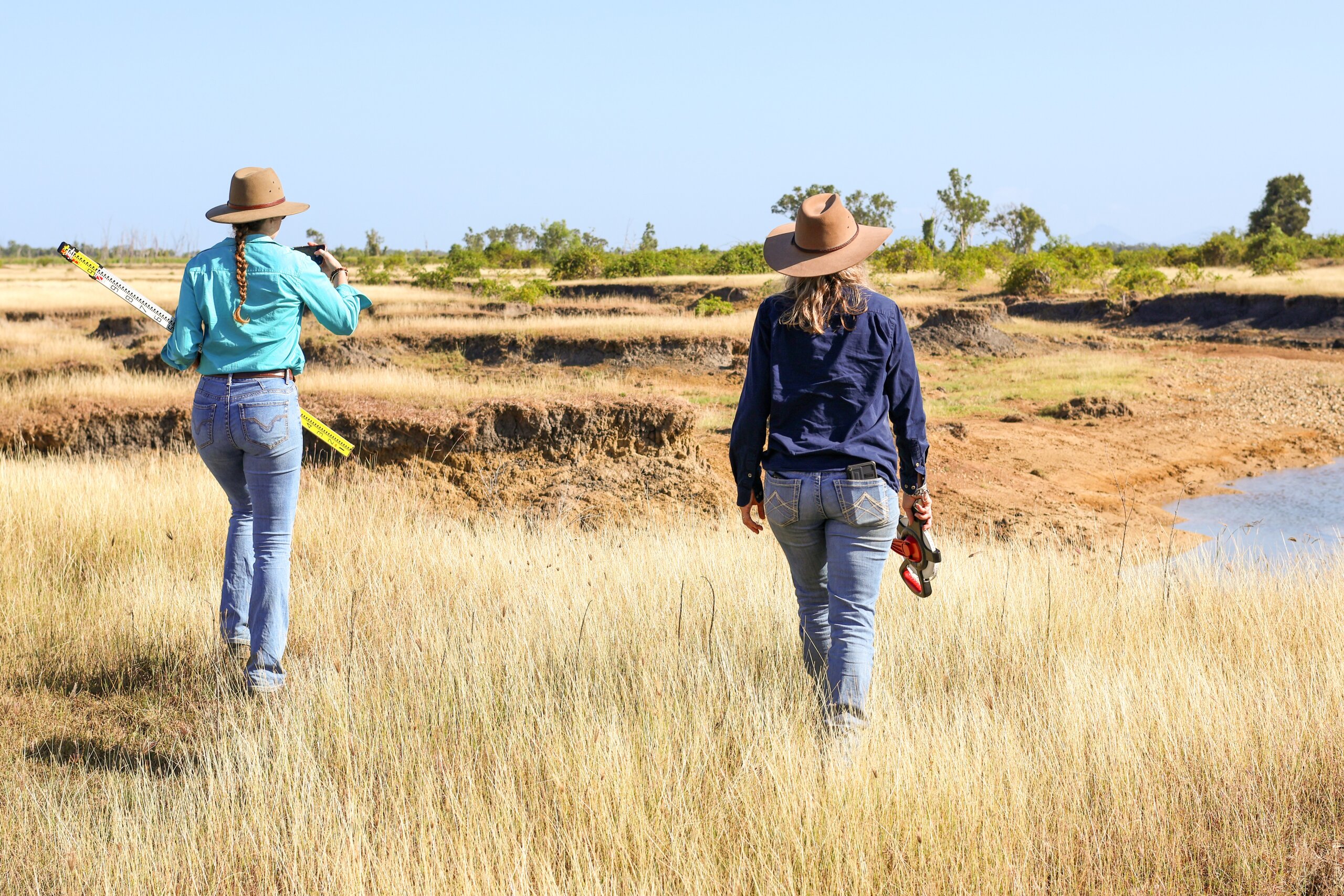
This site was not chosen at random. FBA could see Six Mile had up to a hundred metres of bank that had migrated between 1999 and 2019. And beyond the site there is a chain of connected waterways that carry the sediment out to the Great Barrier Reef Lagoon.
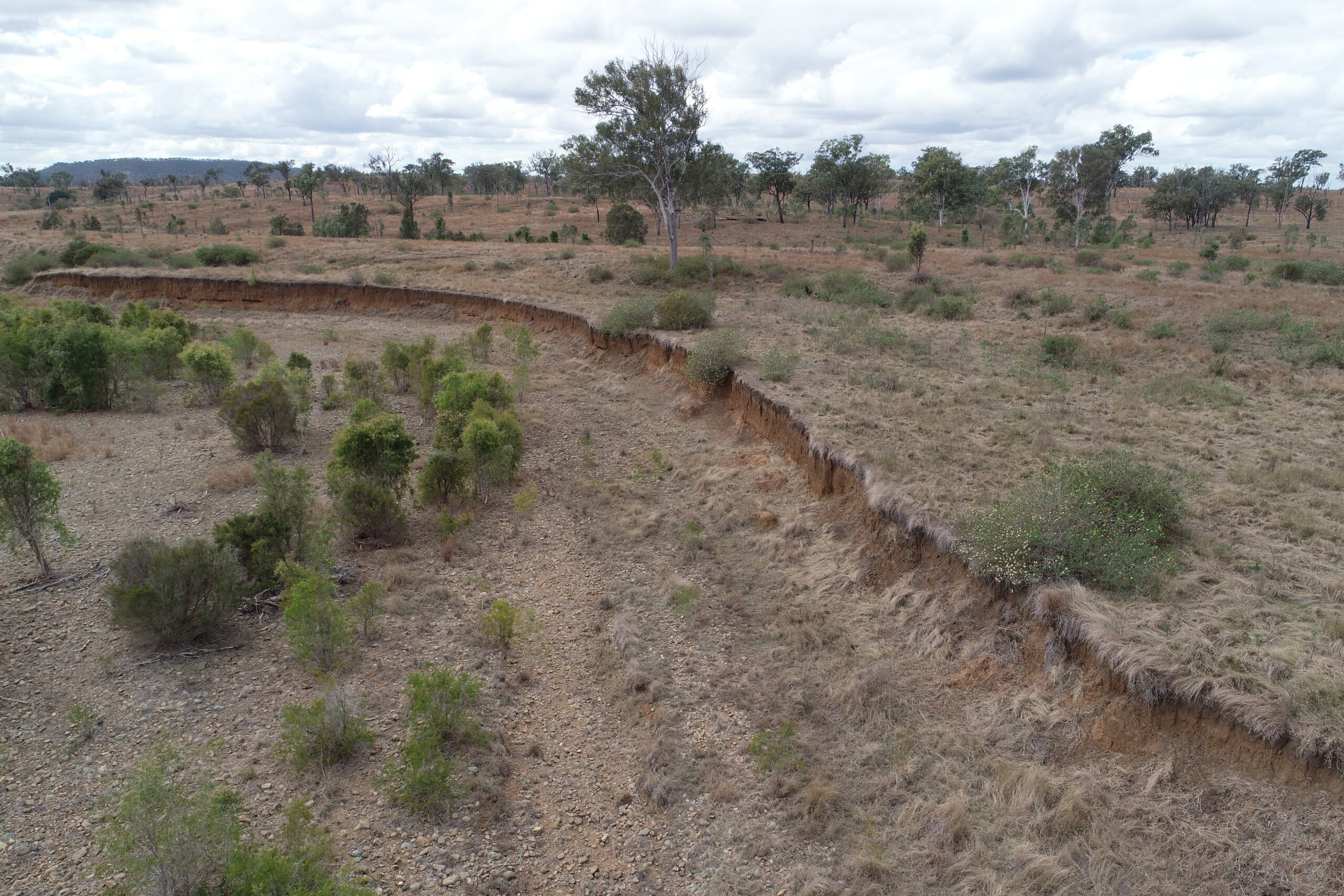
Six Mile Creek before work commenced 2023
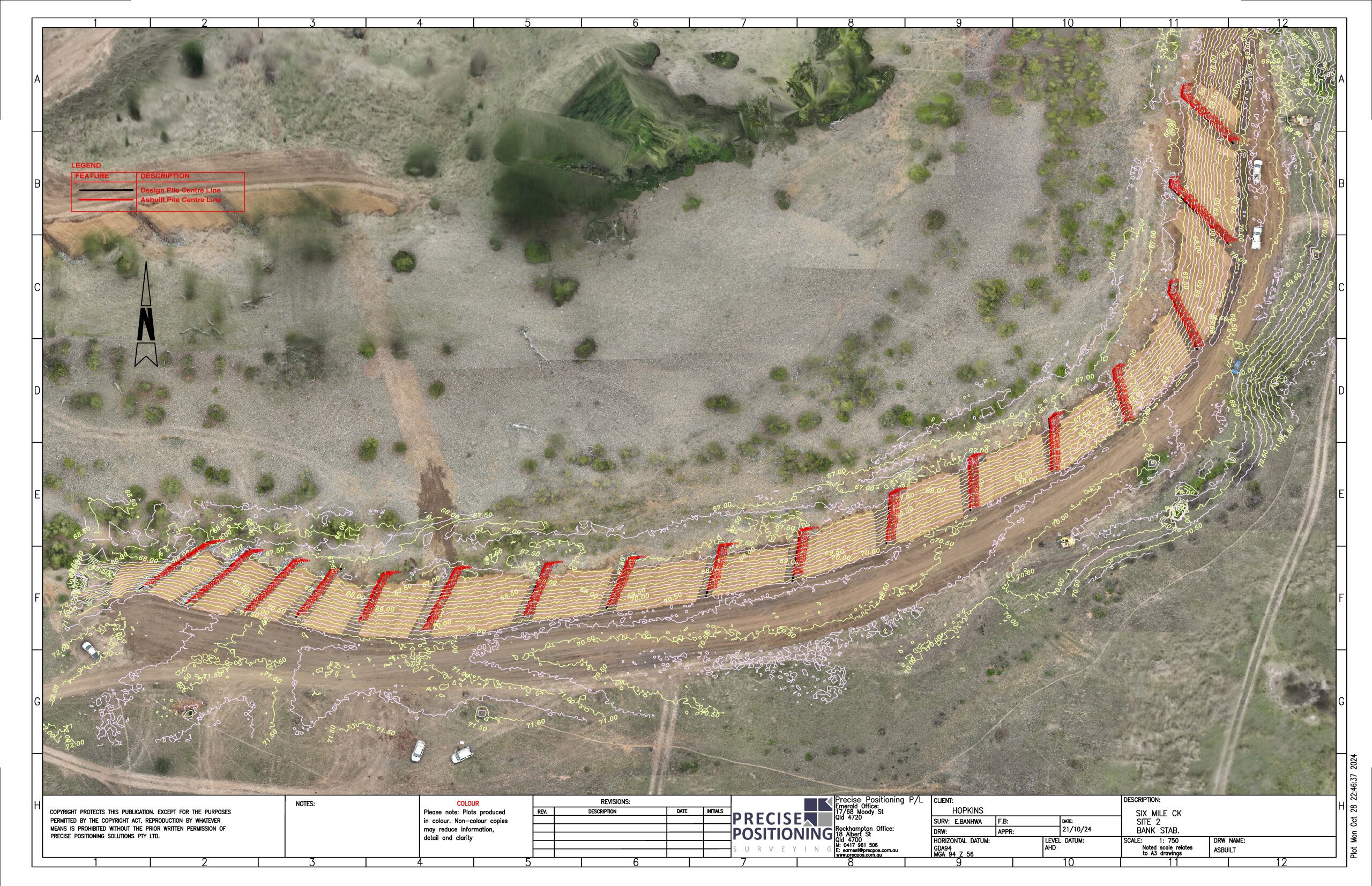
Site plan for Six Mile Creek
The numbers tell the ‘why’ behind the project − 1,368 tonnes of fine sediment kept from washing downstream each year. But the time series shows the results. Photos from the middle of the project’s timeline show the once heavily eroded banks battered back to a gentler 3:1 slope. Pile fields appear like ribs along the edge with rock benches in place along the toe. These structures anchor the creek where it once slipped away. The combined works absorb the force of high flows, redirecting the water flow back into the middle of the creek which helps keep the waters strong energy force away from erodible edges of the bank.
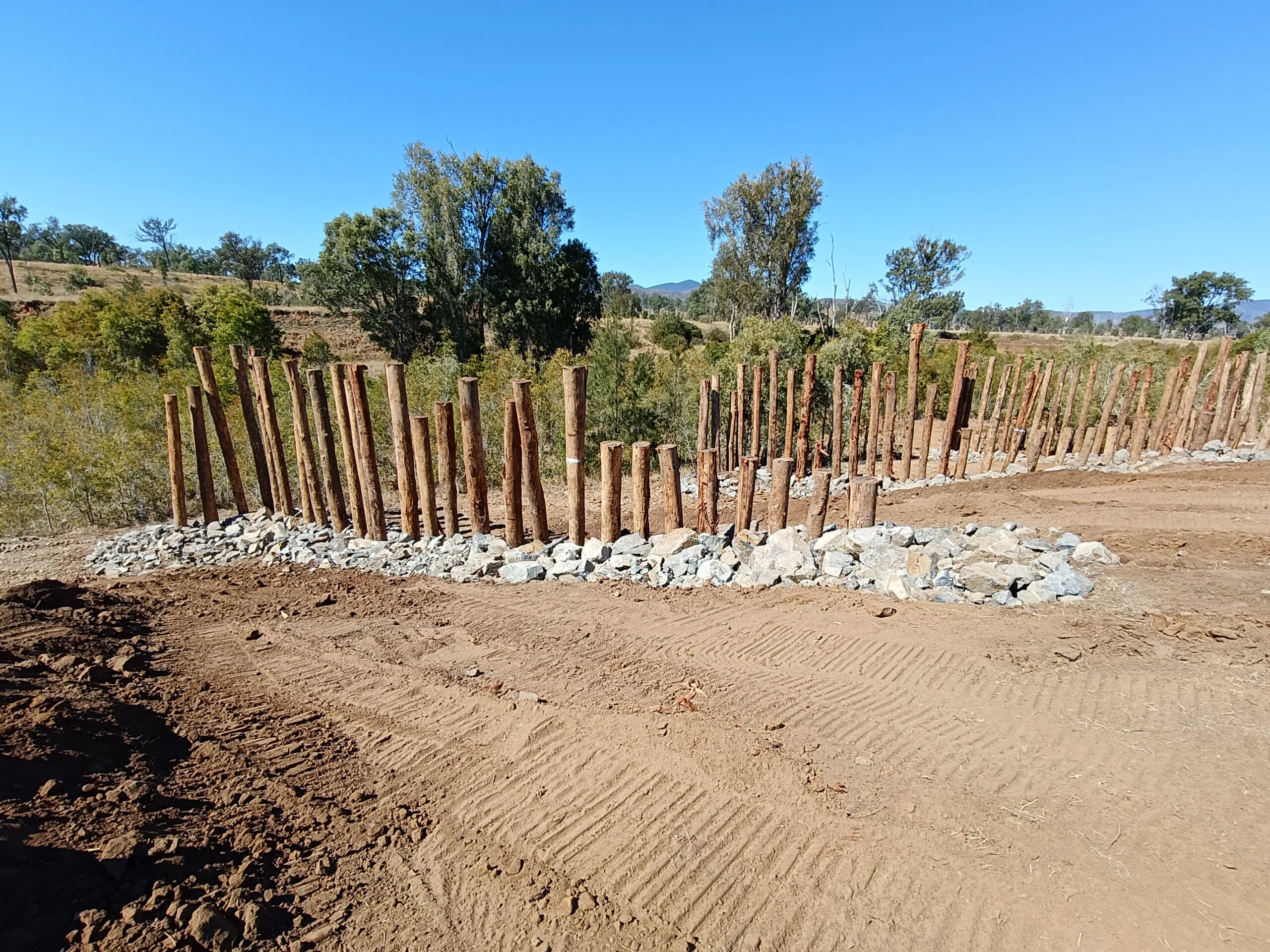
Pile fields installed 2023
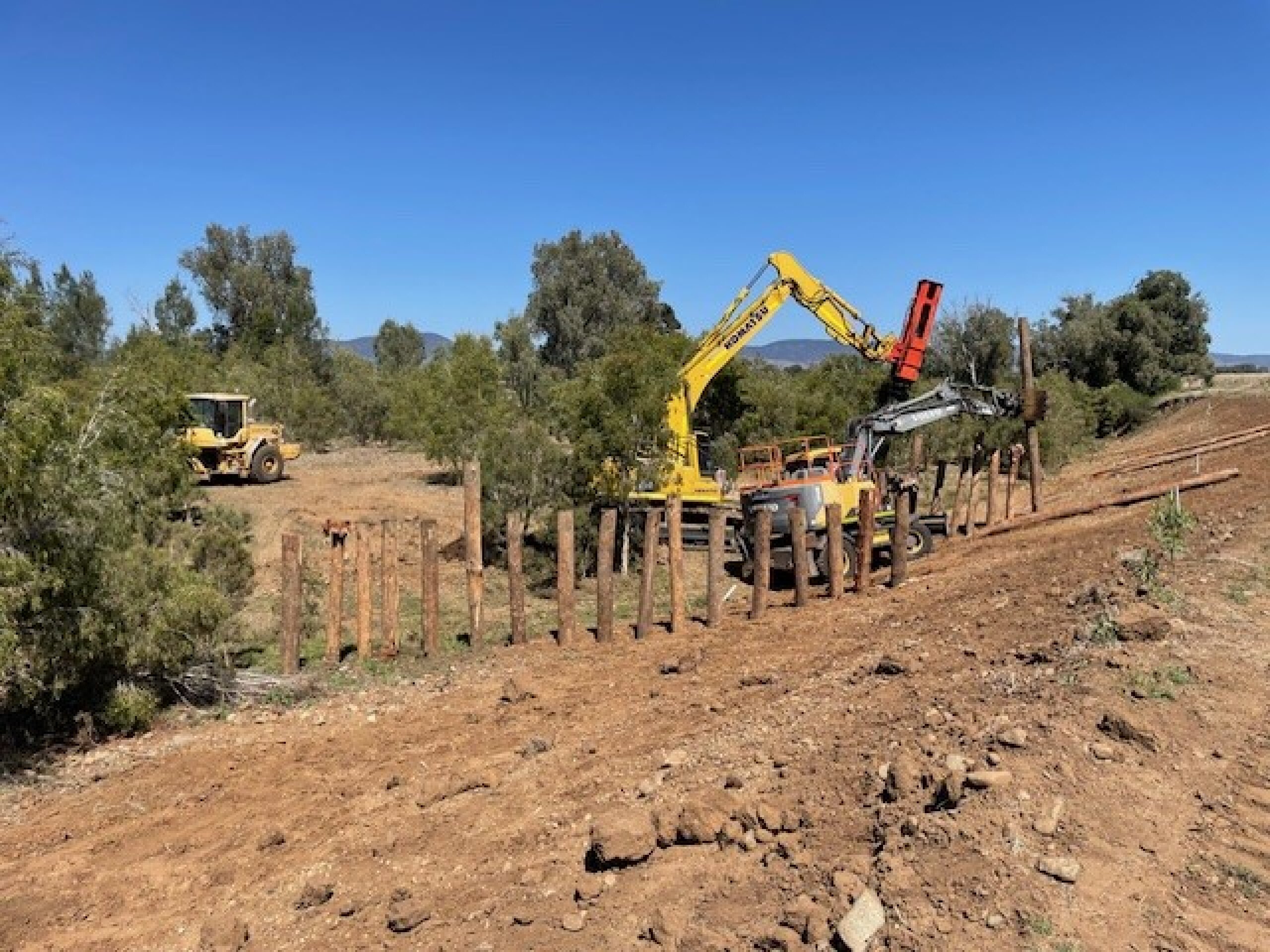
Banks being battered and pile fields installed 2023
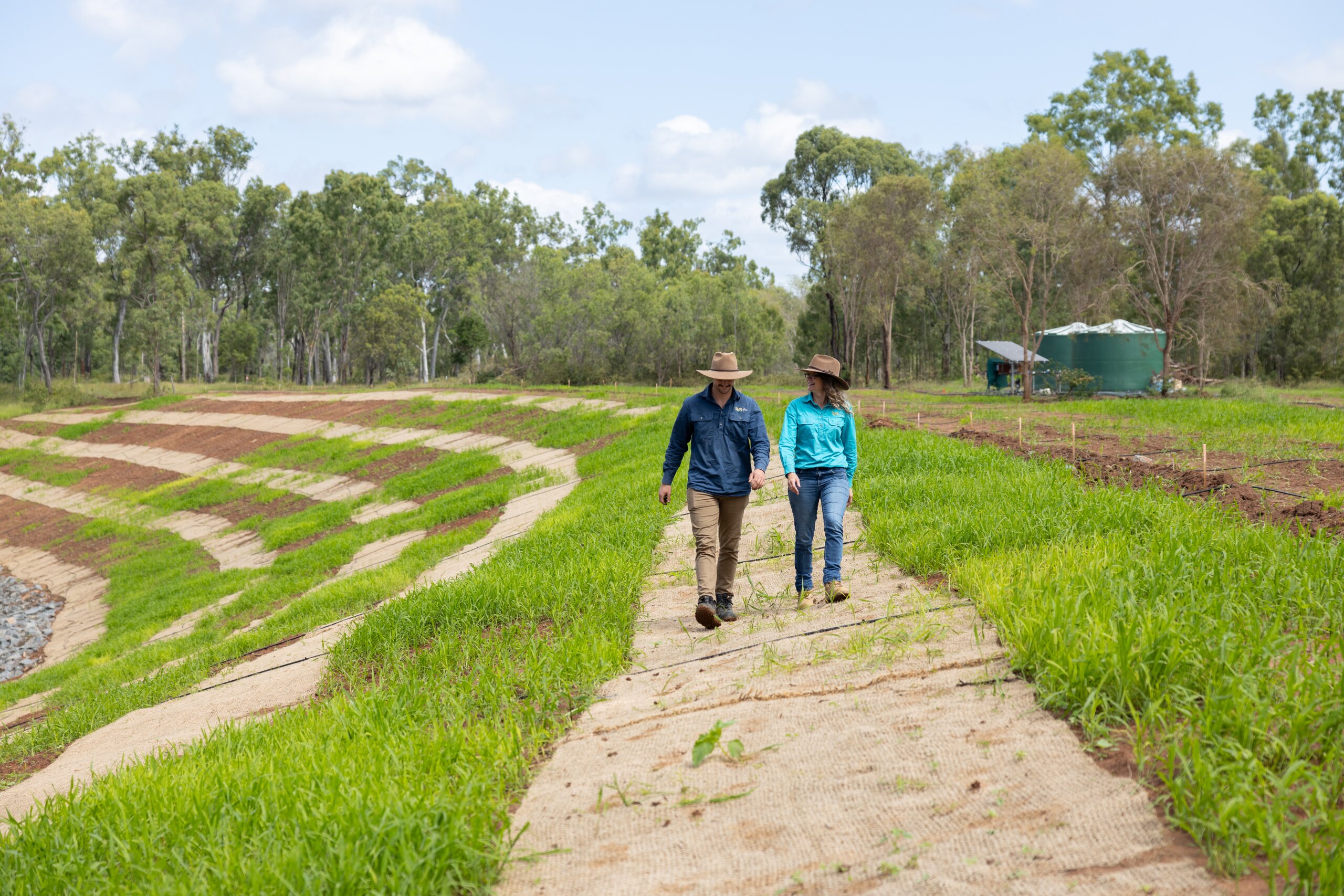
Then came the quieter gestures. Lines of native seedlings have now grown into waist high trees that will only keep growing thanks to an irrigation system supporting them on the dry days. Fencing is part of this too; it’s a simple but deliberate method to manage stock access so the banks can continue healing and trees can grow.
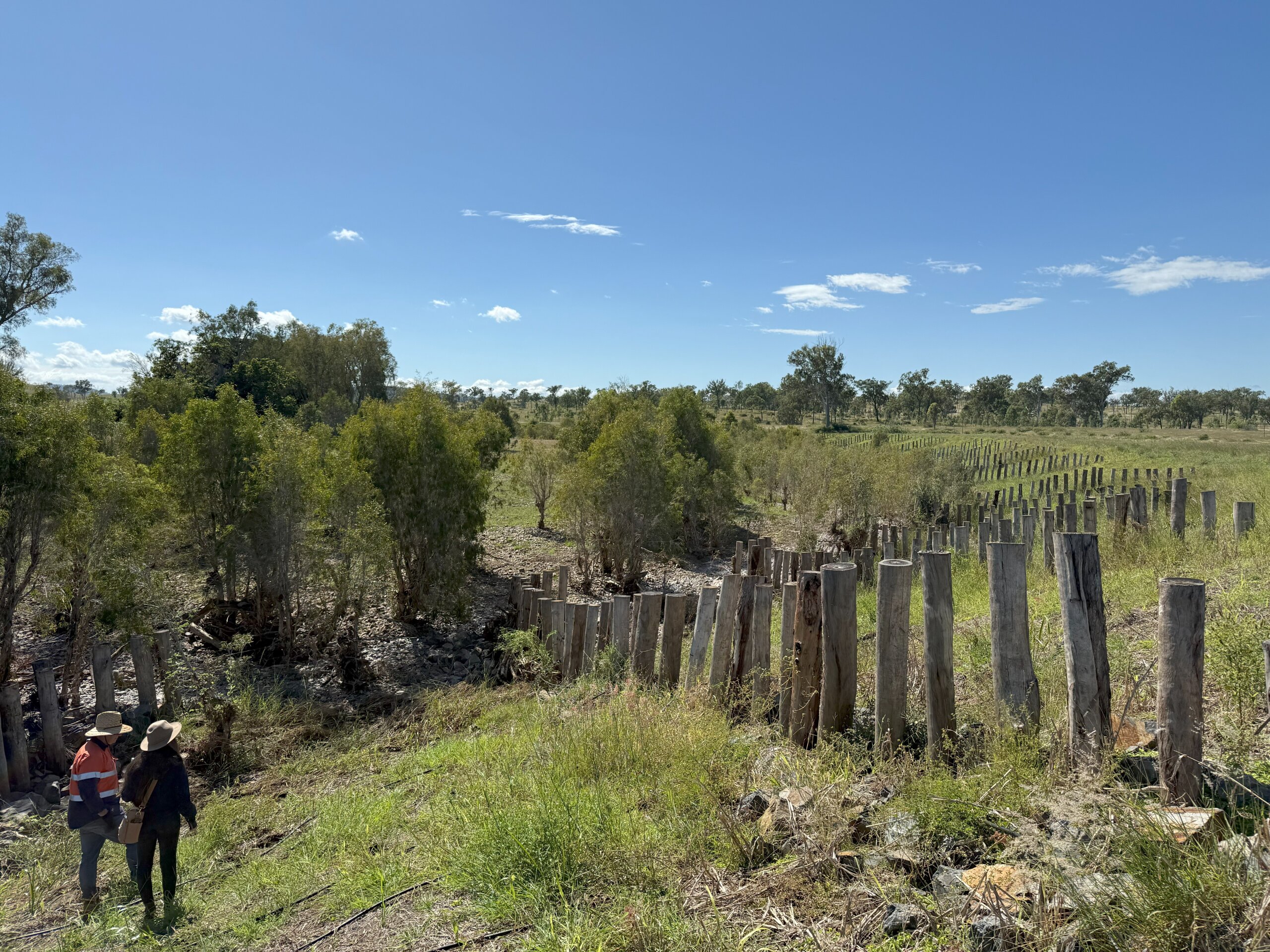
Revegetation work taking hold 2025
Over time, these small acts accumulated. Roots took hold. Soil stopped crumbling away. The creek edge, once uncertain, began to steady itself. To wrap up the end of this project, nature decided to provide the site with a flooding test… While it may not look as pretty today as it did 4 months ago, with debris clinging to the pile fields and fences, this is actually a great outcome because those structures have done their job and have held the site steady through the currents. During the flood, the water rose, muddy and forceful, it pressed against the banks with the same old intent. But this time when it receded, the banks were un-harmed and standing strong. Less neat, less composed. Some of the surface was roughened, plants bent or buried.
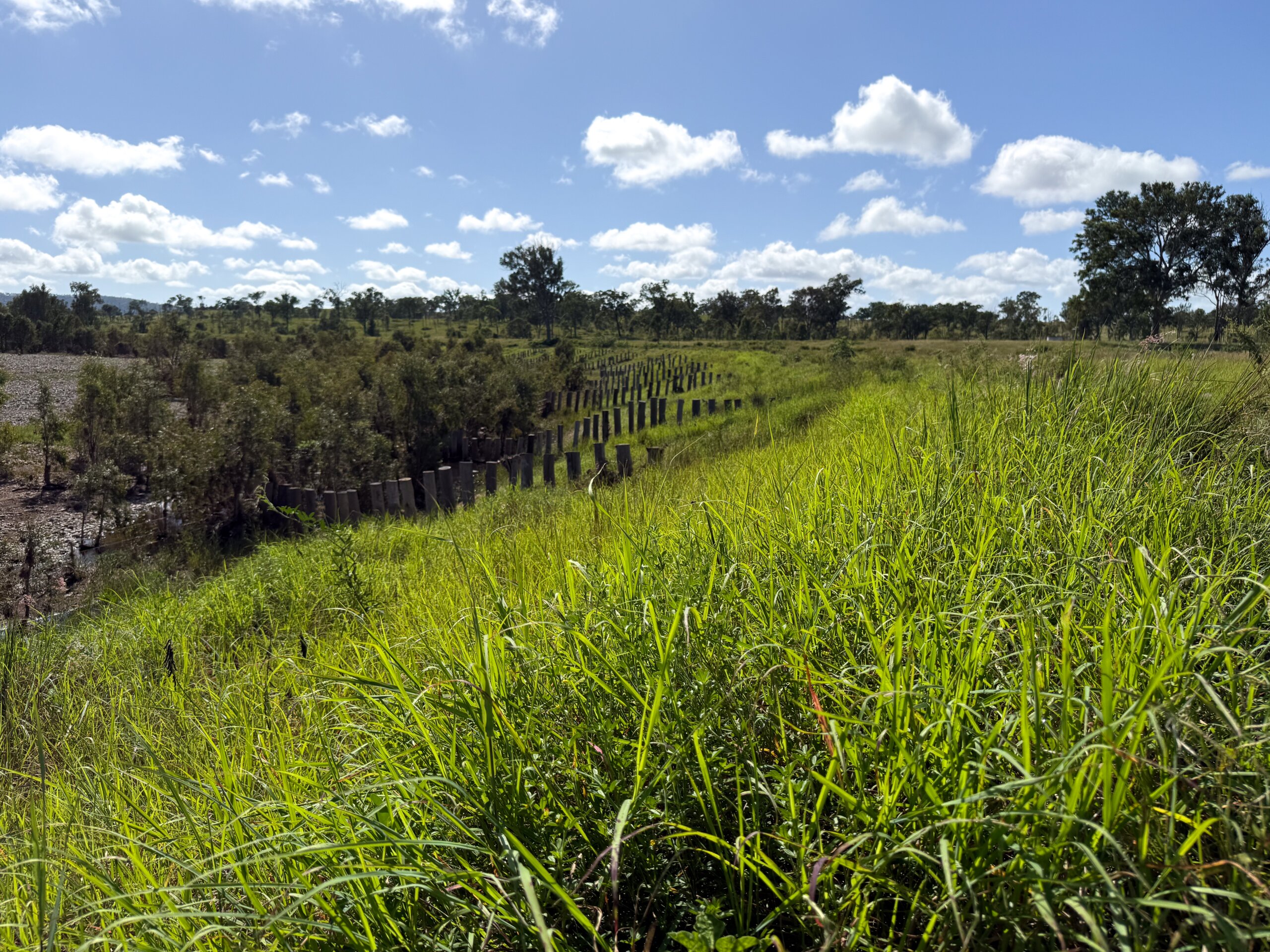
Established revegetation work at six mile 2026
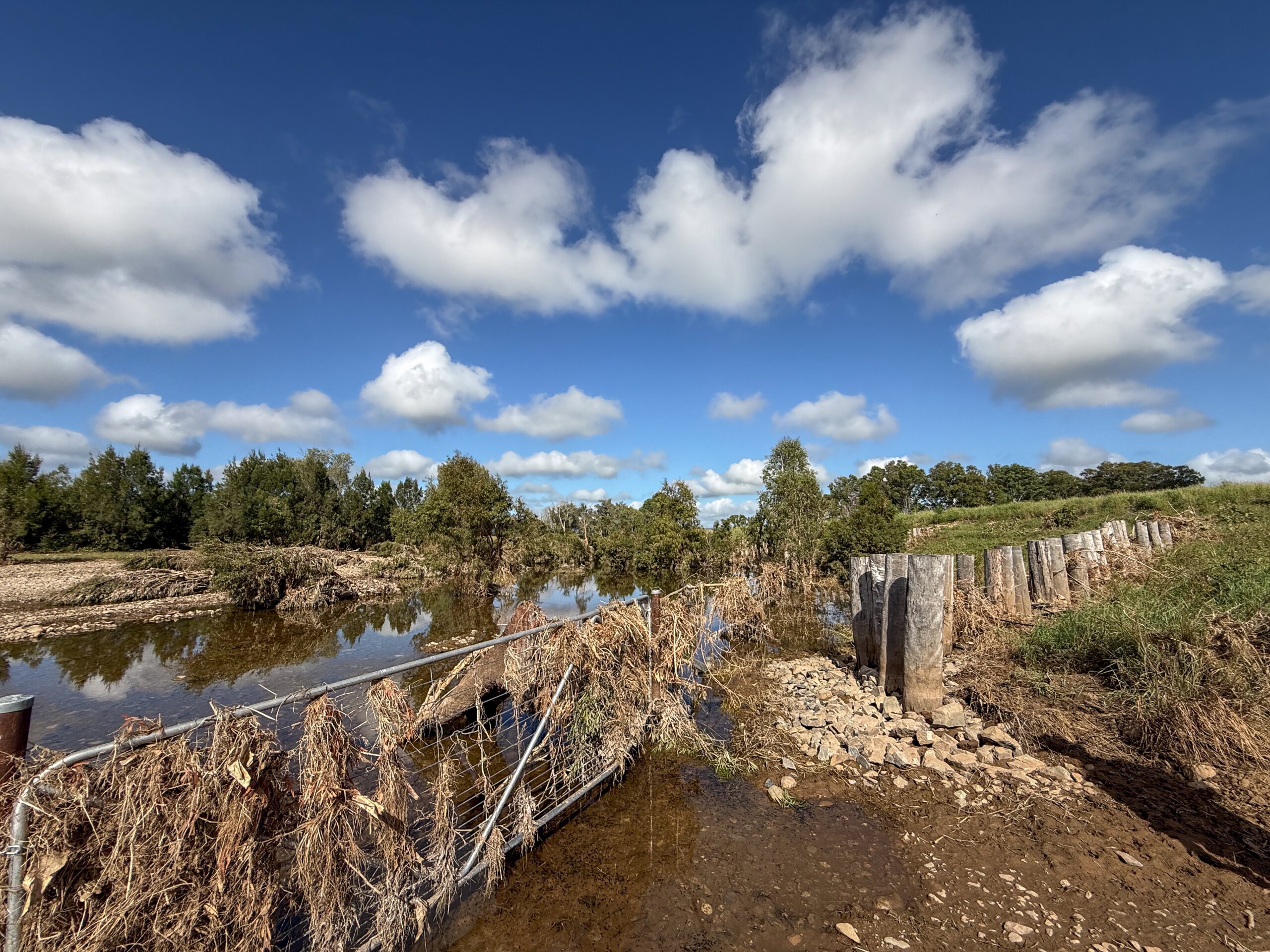
Six Mile after 2026 flooding
While it doesn’t look like a perfect photo to wrap up a time series, nature provided the test and the bank is still there.
Which, in the end, is the point of projects like this, keeping valuable soil in the paddock and out of waterways. The results will help shape future waterways projects for FBA.
This streambank remediation project is funded through the Queensland Government’s Queensland Reef Water Quality Program.